Choosing a window treatment can feel complicated when two products look similar but perform differently. Roller shades and solar shades both have streamlined profiles, operate smoothly, and can be customized for a wide range of windows. However, they are made with different materials and designed to solve different light-control challenges.
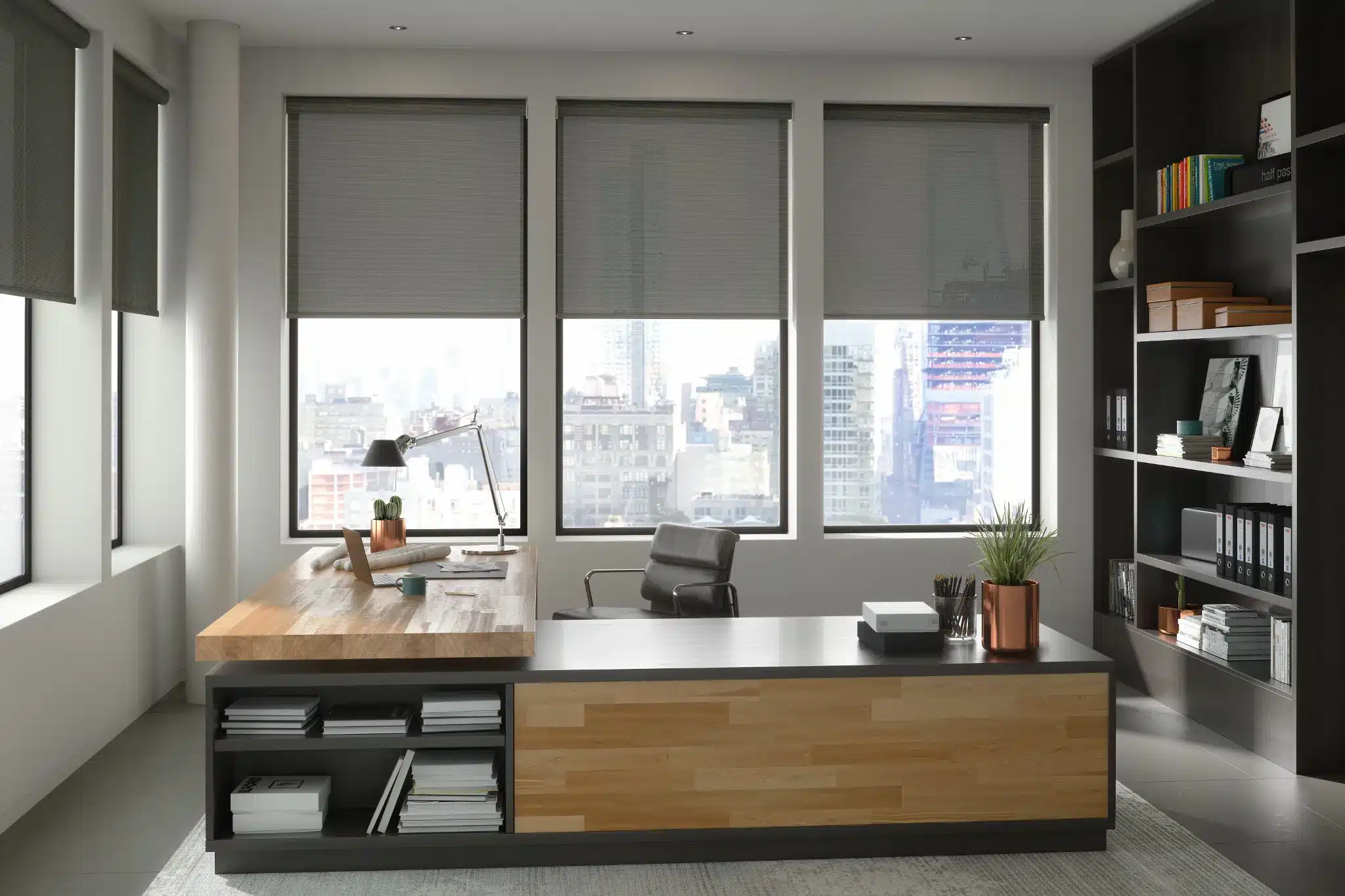
When comparing roller shades vs. solar shades, the central difference is visibility. Traditional roller shades are available in materials ranging from softly light filtering to room darkening. Solar shades use an open-weave performance material that reduces glare and ultraviolet exposure while preserving some visibility through the window.
Neither option is automatically better. The right shade depends on the room, window direction, privacy requirements, desired view, and time of day when sunlight causes the greatest problems. An Iowa City living room overlooking the backyard may benefit from solar shades, while a bedroom in North Liberty may need the greater privacy and light control of a traditional roller shade.
Understanding how each product works will help you select window coverings that make your home more comfortable, functional, and visually appealing.
What Is a Roller Shade?
A roller shade consists of a panel of material that rolls around a tube installed at the top of the window. When raised, the material collects neatly around the tube. When lowered, it covers the glass with a smooth, uninterrupted surface.
Roller shades are available in a broad range of materials, including:
- Sheer and softly diffusing materials
- Light-filtering fabrics
- Privacy materials
- Room-darkening fabrics
- Textured and woven designs
- Solid colors
- Decorative patterns
- Easy-care performance materials
This variety makes roller shades suitable for bedrooms, living rooms, dining areas, kitchens, nurseries, home offices, and many other spaces.
Depending on the selected material, a roller shade may brighten a room with softly filtered daylight, provide substantial privacy, or reduce incoming light for sleeping and media viewing.
What Is a Solar Shade?
A solar shade is technically a specialized type of roller shade. It uses a performance material designed to manage sunlight, glare, ultraviolet exposure, and outward visibility.
The material contains small openings that allow light and views to pass through. The size and density of these openings influence how the shade performs.
Solar shades are commonly used in:
- Living rooms with strong sunlight
- Home offices
- Great rooms
- Sunrooms
- Kitchens and breakfast areas
- Rooms with televisions or computer screens
- Windows overlooking attractive outdoor spaces
- Commercial offices
- Patios and other suitable exterior applications
Although solar shades reduce the intensity of sunlight, they generally do not provide dependable nighttime privacy. When the room is illuminated after dark, people outside may be able to see through the material.
This privacy limitation is one of the most important considerations in the roller shades vs. solar shades decision.
The Primary Difference Between Roller and Solar Shades
Roller shades are available in materials designed primarily for privacy, decoration, daylight diffusion, or room darkening. Solar shades are specifically engineered to reduce the uncomfortable effects of direct sunlight while retaining some outward visibility.
A traditional light-filtering roller shade may brighten a room but obscure the outdoor view. A room-darkening roller shade can provide greater light blockage and privacy. A solar shade reduces glare and softens the view without completely concealing it during the day.
The correct choice depends on what you want the window covering to accomplish. If your priorities are privacy and bedroom light control, a roller shade may be more appropriate. If your priority is reducing afternoon glare without losing your view, a solar shade may be the stronger choice.
Roller Shades vs. Solar Shades for Light Control
Both products control light, but they do so in different ways.
How Roller Shades Manage Light
The performance of a roller shade depends on the opacity of its material. A sheer or light-filtering fabric allows daylight to enter while softening its intensity. A more opaque material blocks a greater portion of the light.
Room-darkening roller shades can make bedrooms and media rooms significantly darker. However, no interior shade automatically guarantees complete darkness. Small light gaps may remain around the top, sides, or bottom of the product.
Professional measurement and the appropriate mounting method can help minimize these gaps. Additional features may also be considered when maximum darkness is a priority.
How Solar Shades Manage Light
Solar shades filter direct sunlight through their woven material. They are particularly effective at reducing harsh glare while maintaining a connection to the outdoors.
The material does not create the same darkening effect as an opaque roller shade. Instead, it reduces the intensity of the sun so the room remains usable and comfortable.
This makes solar shades useful in rooms where homeowners want natural light but struggle with glare on a television, computer monitor, or glossy surface.
Understanding Solar Shade Openness Factors
The openness factor describes the percentage of the solar material that consists of open space. Common options may include 1%, 3%, 5%, and 10%, although availability varies by manufacturer and collection.
Lower Openness Factors
A lower openness factor means the material has a tighter weave. It provides:
- Greater glare reduction
- More ultraviolet protection
- Increased daytime privacy
- Less outward visibility
- A more enclosed appearance
A 1% solar material, for example, typically provides a more limited view than a 10% material.
Higher Openness Factors
A higher openness factor contains larger or more numerous openings. It generally provides:
- A clearer view outside
- More natural light
- Less daytime privacy
- Less glare reduction
- Lower ultraviolet protection than a tighter weave
A 10% material may work well where preserving the view is the primary goal and the sunlight is less severe.
Choosing the Right Openness
The ideal openness factor depends on the direction the window faces, the intensity of the sunlight, the desired view, and the room’s use.
A west-facing window exposed to intense afternoon sun may need a tighter material than a north-facing window with softer daylight. A home office may prioritize glare control, while a living room overlooking a wooded yard may prioritize visibility.
When evaluating roller shades vs. solar shades, remember that solar shades are not a single uniform product. The selected openness factor can substantially change their performance.
Privacy During the Day and at Night
Privacy is often the deciding factor between these two window treatments.
Privacy with Roller Shades
Many roller shade materials are designed to provide privacy when fully lowered. The level of privacy depends on the fabric.
A light-filtering material may obscure details while still allowing some silhouettes to appear under certain lighting conditions. An opaque or room-darkening material generally provides greater privacy.
Homeowners should evaluate samples in both natural and artificial light. A fabric that appears private during the day may behave differently after dark.
Privacy with Solar Shades
Solar shades may provide a useful degree of privacy during daylight hours when the exterior is brighter than the interior. However, this effect reverses at night.
When lights are turned on inside, people outside may be able to see into the room through the solar material. The exact visibility depends on the openness factor, color, distance, and lighting, but solar shades should not be relied upon as the only nighttime privacy covering.
For bedrooms, bathrooms, and street-facing rooms, this limitation is important. A traditional roller shade or another private window treatment may be more suitable.
Roller Shades vs. Solar Shades for Preserving the View
If a home has attractive views of a backyard, landscape, neighborhood pond, wooded area, or open countryside, covering the windows with an opaque material may feel restrictive.
Solar shades can soften bright light while allowing homeowners to retain some visual connection with the outdoors. The view will be clearer through a material with a higher openness factor and less distinct through a tighter weave.
Traditional roller shades generally obscure the view when lowered. A sheer fabric may admit daylight, but the pattern or construction often diffuses visibility instead of preserving a clear view.
For Eastern Iowa homes with large windows overlooking outdoor spaces, solar shades may provide a helpful balance between glare control and visibility.
Glare Control for Televisions and Computer Screens
Glare can make a room difficult to use even when the overall light level feels comfortable. Direct sunlight reflecting on a television, tablet, or computer screen may cause eye strain and make images hard to see.
Solar shades are designed for this challenge. By filtering direct sunlight, they can reduce distracting reflections without making the room unnecessarily dark.
A tighter openness factor generally offers stronger glare reduction. Darker solar materials may also provide a clearer outward view because the eye looks through the darker weave more easily. However, color affects heat absorption, outward appearance, and interior design, so it should be selected carefully.
A room-darkening roller shade can eliminate more light, but it may also remove the natural daylight and outdoor view. The better option depends on whether the goal is to reduce glare or darken the entire space.
For many home offices, the roller shades vs. solar shades comparison favors solar materials during working hours, provided nighttime privacy is not a concern.
Ultraviolet Protection and Fading
Sunlight can affect flooring, furniture, artwork, cabinetry, and other interior materials. Ultraviolet exposure is one factor that contributes to fading and deterioration over time.
Solar shades are designed to reduce ultraviolet transmission while allowing some daylight and visibility. Tighter openness factors generally provide greater protection than more open materials.
Roller shades can also protect interiors when lowered. An opaque roller material creates a more complete barrier between the sun and the room, but it also blocks the view.
No window covering can reverse existing fading or eliminate every source of material deterioration. However, controlling direct sunlight can help reduce ongoing exposure.
Homeowners should identify which windows receive the strongest sunlight and which furnishings need protection. A custom recommendation may vary from one side of the home to another.
Heat and Indoor Comfort
Large expanses of glass can make rooms feel warmer during sunny weather. This is especially noticeable around west- and south-facing windows.
Interior solar shades can reduce direct solar glare and may improve comfort near the window. However, some heat has already passed through the glass before reaching an interior shade.
Exterior solar shades and awnings intercept sunlight before it reaches the glass and may provide stronger heat-control benefits in appropriate applications. Made in the Shade – Eastern Iowa offers interior window treatments as well as exterior shades and awnings, allowing homeowners to compare solutions based on the location and severity of the problem.
Traditional roller shades can also reduce direct sunlight when lowered. Opaque materials may provide stronger visual blockage, while specialized products may offer additional insulating or reflective properties.
When comparing roller shades vs. solar shades for temperature control, the glass type, window direction, material color, openness, mounting location, and time of day should all be considered.
Does Solar Shade Color Affect Performance?
Solar shades are commonly available in light, dark, and neutral colors. Color influences the interior appearance, outward view, glare reduction, and the way the material handles sunlight.
Light-Colored Solar Materials
Light solar materials may reflect more visible light and coordinate easily with pale walls and trim. They can create a bright appearance, but the outdoor view may appear less distinct because the eye notices the light-colored weave.
Dark-Colored Solar Materials
Dark materials often provide a clearer view to the outside because the weave visually recedes. They can also offer effective glare control.
However, dark colors may absorb more heat at the shade’s surface. Product construction and performance specifications vary, so color should be evaluated alongside the openness factor rather than chosen independently.
Dual-Tone Materials
Some solar materials use different colors on the room-facing and window-facing sides. This can provide a preferred interior color while using another exterior-facing color for performance or visual consistency.
During an in-home consultation, samples can be placed directly against the window. This provides a more accurate impression than selecting from photographs alone.
Fabric and Design Choices for Roller Shades
Traditional roller shades generally offer a broader range of decorative possibilities than solar shades. Homeowners can select from simple solids, woven textures, subtle patterns, bold colors, and materials inspired by natural fibers.
This versatility allows roller shades to function as both practical window coverings and visible design features.
A textured neutral can add softness without dominating the room. A darker color may create contrast against pale trim. A patterned material can give a smaller window more personality.
Decorative choices should still be evaluated for light control and privacy. Two fabrics that look similar may perform very differently when sunlight passes through them.
In the roller shades vs. solar shades comparison, roller shades typically offer greater flexibility for homeowners who want the material itself to contribute noticeably to the room’s design.
Which Shade Is Better for Bedrooms?
Bedrooms usually require privacy and greater control over early morning or nighttime light. For these reasons, traditional roller shades are often more suitable than solar shades.
A room-darkening roller shade can substantially reduce incoming light and provide privacy when fully lowered. Light may still enter around the edges, particularly with an inside-mounted shade, but the correct design can make the room significantly darker.
Solar shades reduce sunlight but do not provide dependable nighttime privacy. They also allow more light to pass through the material than a room-darkening roller shade.
If a bedroom has a beautiful daytime view, homeowners may consider a layered or dual-shade solution that combines solar performance with a more private material. Product availability and window depth will determine what configurations are possible.
When choosing roller shades vs. solar shades for a bedroom, privacy should generally take priority over preserving the view.
Which Shade Is Better for Living Rooms?
The answer depends on how the living room is used.
Solar shades may be ideal when the room has expansive windows, attractive views, or significant glare. They can reduce the intensity of the sunlight while keeping the space connected to the outdoors.
Roller shades may be preferable when nighttime privacy is essential or when homeowners want the window covering to add texture, color, or pattern.
Consider these questions:
- Does the room face a street or neighboring home?
- Is television glare a recurring problem?
- Are the windows exposed to intense afternoon sun?
- Is the outdoor view important?
- Is the room used primarily during the day or evening?
- Should the shade disappear visually or become a design feature?
- Is complete nighttime privacy necessary?
The answers will help determine which material is more appropriate.
Which Shade Is Better for Home Offices?
Home offices require balanced light. Too much sunlight creates glare, but a completely dark room may feel uncomfortable and require additional artificial lighting.
Solar shades can reduce reflections on computer screens while preserving daylight and an outward view. This makes them a practical choice for offices used primarily during daytime hours.
If the office faces a sidewalk, street, or neighboring property, privacy may be more important. A traditional roller shade can obscure the view into the room, especially after dark.
A tighter solar material may provide greater daytime privacy, but it will not solve the nighttime reversal effect. Homeowners who work after sunset should consider how visible the room will be from outside.
Which Shade Is Better for Kitchens?
Kitchens often benefit from natural light, but direct sunlight can cause glare and make breakfast areas or counters uncomfortable.
Solar shades are useful for kitchen windows with strong sun exposure, particularly when homeowners want to preserve a backyard view. Roller shades are available in easy-care materials and may provide greater privacy.
The position of the window matters. A covering near a sink or food-preparation area should be selected with exposure to moisture and splashes in mind. Manufacturer care instructions and material suitability should be reviewed before ordering.
Motorization may be helpful for a shade positioned above a deep counter or sink where the window is difficult to reach.
The best answer to roller shades vs. solar shades in a kitchen depends on the window’s location, privacy needs, and the type of sunlight entering the room.
Which Shade Is Better for Media Rooms?
A dedicated media room generally benefits from greater light blockage. Room-darkening roller shades are usually the stronger option because they can reduce more incoming light than solar materials.
Solar shades are designed to control glare while maintaining some light and visibility. This may work in a multipurpose family room where complete darkness is unnecessary, but it may not be sufficient for a theater-like environment.
Mounting choices are especially important in media rooms. Light gaps around the shade can remain visible even when the selected material is opaque. Professional measurement can help determine whether an inside mount, outside mount, or specialized light-control feature is appropriate.
Roller Shades vs. Solar Shades for Large Windows
Both products can provide a clean solution for large windows, but size limitations depend on the selected material, operating system, and manufacturer.
A large solar shade can preserve the expansive feeling of the glass while managing glare. A large roller shade can provide privacy and a broad field of color or texture.
Very wide openings may need to be divided into multiple shades. Panel divisions should coordinate with the window’s vertical frames whenever possible. This can reduce visual interruption and help the coverings look intentional.
Homeowners should also consider the weight of the shade. Large products may be more comfortable to use with motorization, particularly when they will be adjusted several times each day.
Cordless and Motorized Operating Options
Roller and solar shades may be available with cordless or motorized operation, depending on the product.
Cordless Operation
A cordless shade is raised or lowered using the bottom rail or an integrated handle. This creates a neat appearance without a hanging operating cord.
The window should be within comfortable reach. A cordless shade may be inconvenient on a tall window or behind a large piece of furniture.
Motorized Operation
Motorization allows shades to be controlled with a handheld remote, wall control, mobile app, compatible voice assistant, or programmed schedule. Available controls vary by system.
Motorization is particularly useful for:
- Tall windows
- Wide shades
- Windows above counters or furniture
- Groups of shades
- Two-story living spaces
- Homes with changing sunlight throughout the day
- Homeowners who want automated privacy routines
A schedule could lower solar shades before intense afternoon sunlight reaches the room. Roller shades could close automatically in the evening for privacy.
In the roller shades vs. solar shades decision, the operating system does not need to be the deciding factor because both products may offer similar control options.
Inside Mount Versus Outside Mount
The mounting position affects the shade’s fit, appearance, and light control.
Inside Mount
An inside-mounted shade fits within the window opening. This creates a contained appearance and leaves the surrounding trim visible.
The opening must have enough depth for the selected shade and hardware. Inside mounting also typically leaves narrow light gaps along the sides.
Outside Mount
An outside-mounted shade extends beyond the window opening and attaches to the wall or trim. This may reduce visible gaps and cover an opening that lacks adequate mounting depth.
The shade requires enough surrounding space to avoid interfering with switches, handles, cabinetry, or adjacent windows.
For solar shades, small side gaps may be less important because the material itself is designed to transmit some light. For room-darkening roller shades, the mounting method can substantially affect the final darkness.
Dual Roller and Solar Shade Solutions
Some homeowners need daytime glare control and complete nighttime privacy from the same window. A dual-shade system may provide both functions.
Depending on product availability and mounting space, one roller may contain a solar material while the second uses a privacy or room-darkening fabric. During the day, the solar shade can reduce glare and preserve the view. At night, the private roller shade can be lowered.
Dual systems require more space than a single shade and may have a larger headrail or enclosure. Accurate measurement is essential to confirm that the window can accommodate the system.
A dual solution may be particularly useful in:
- Bedrooms with scenic views
- Street-facing home offices
- Living rooms used during both day and night
- Urban or closely spaced neighborhoods
- Rooms with intense sun and substantial privacy needs
For homeowners who feel stuck between roller shades vs. solar shades, combining both may eliminate the need to compromise.
Indoor and Outdoor Solar Shades
Interior solar shades are installed inside the home and provide convenient glare and ultraviolet control. Exterior solar shades are installed outside and intercept sunlight before it reaches the glass.
Exterior products may be considered for patios, covered outdoor living areas, or windows with severe sun exposure. Because they are exposed to wind, rain, temperature changes, and outdoor debris, they must be specifically designed for exterior use.
An indoor solar material should never be assumed suitable for outdoor installation. Hardware, fabric construction, anchoring, and operating systems differ.
Made in the Shade – Eastern Iowa offers exterior shades and awnings in addition to interior blinds, shades, shutters, draperies, and motorization. Comparing interior and exterior options can be helpful when heat and sunlight affect several rooms or an outdoor living area.
Cleaning and Maintenance
Both roller and solar shades have relatively simple profiles, which can make routine care straightforward.
Dust may be removed with a soft cloth, microfiber duster, or suitable vacuum attachment. Some solar materials can be gently wiped, but care recommendations vary.
Homeowners should avoid saturating the material, scrubbing aggressively, or applying an unapproved cleaner. Decorative roller fabrics may require different care than performance solar materials.
The tube, brackets, bottom rail, and operating components should also remain free from debris. If a shade begins moving unevenly or fails to stop correctly, professional service may be preferable to forcing the mechanism.
Common Mistakes to Avoid
Choosing between these products requires more than selecting a color from a sample book.
Assuming Solar Shades Provide Nighttime Privacy
Solar materials become more transparent from the darker side toward the brighter side. At night, an illuminated room may be visible from outside.
Choosing an Openness Factor Without Considering Window Direction
A material that works well on a north-facing window may not provide enough glare control on a west-facing window.
Expecting Room-Darkening Fabric to Eliminate Every Light Gap
The material may block most light, but brightness can enter around the shade. Mounting and design details affect the result.
Selecting Color Based Only on Interior Appearance
Solar shade color can influence view-through and glare control. Evaluate appearance and performance together.
Forgetting About Operation
A manually operated shade is only convenient if the bottom rail is within reach. Tall or obstructed windows may require motorization.
Treating Every Room the Same
A home office, bedroom, kitchen, and living room have different privacy and light-control needs. Using one material everywhere may produce disappointing results.
Questions to Ask During an In-Home Consultation
Before selecting roller or solar shades, ask:
- How much privacy will this material provide during the day?
- What will be visible from outside at night?
- Which openness factor suits this window direction?
- How much of the outdoor view will remain visible?
- Is the material appropriate for strong afternoon sun?
- Would a light-filtering or room-darkening roller fabric work better?
- Will the shade require an inside or outside mount?
- Are there side gaps?
- Is motorization available?
- Can multiple shades be operated together?
- Would a dual-shade system fit?
- How should the material be cleaned?
- Is an interior or exterior solar product more appropriate?
These details provide a clearer picture of how the shade will perform after installation.
Roller Shades vs. Solar Shades in Eastern Iowa Homes
Eastern Iowa experiences changing daylight and seasonal conditions. A room that feels comfortable on a cloudy winter morning may receive intense glare on a summer afternoon. The direction of the window and nearby trees or buildings can be just as important as the general climate.
Homes in Iowa City, Cedar Rapids, Davenport, Bettendorf, North Liberty, Tiffin, and throughout the Quad Cities also vary widely in architecture. Some have traditional divided windows, while others feature large expanses of glass and open-concept living spaces.
Homeowners asking about roller shades vs. solar shades should evaluate each window individually. A solar shade may work well in a Cedar Rapids home office with western exposure, while a room-darkening roller shade may be more suitable for a child’s bedroom in Tiffin. A Bettendorf living room with a backyard view may benefit from solar material during the day and a second privacy shade at night.
Local, in-home product comparisons make it easier to account for these differences.
Making the Final Choice
Choose traditional roller shades when your priorities include:
- Nighttime privacy
- Room darkening
- Decorative colors or patterns
- Softly diffused daylight
- A fabric-forward appearance
- Broader opacity choices
Choose solar shades when your priorities include:
- Reducing glare
- Preserving an outdoor view
- Managing direct sunlight
- Reducing ultraviolet exposure
- Maintaining daytime visibility
- Supporting computer or television use
Consider a dual-shade system when you need both solar performance and dependable privacy.
Ultimately, the roller shades vs. solar shades decision comes down to what must happen when the covering is lowered. If it should conceal the view and provide privacy, a roller shade is usually the better starting point. If it should filter sunlight while maintaining a visual connection with the outdoors, a solar shade may be the more appropriate choice.
Explore Custom Roller and Solar Shades in Eastern Iowa
Roller and solar shades share a clean, streamlined appearance, but they solve different problems. Traditional roller shades provide more choices for privacy, decoration, and room darkening. Solar shades specialize in glare reduction, ultraviolet control, and daytime view preservation.
Made in the Shade – Eastern Iowa can help you compare roller shades vs. solar shades in the lighting and surroundings of your own home. During an in-home consultation, you can evaluate fabric colors, openness factors, privacy levels, operating systems, and mounting options before making a decision.
Made in the Shade – Eastern Iowa serves Iowa City, Davenport, Bettendorf, the Quad Cities, Cedar Rapids, North Liberty, Tiffin, and surrounding communities. The company offers custom blinds, shades, shutters, draperies, motorization, exterior shades, and awnings.
To explore custom window treatments for your Eastern Iowa home, call 563-726-8040 and schedule a complimentary in-home consultation.

