
Sliding glass doors bring natural light, outdoor views, and convenient patio access into a home. However, their size and frequent use can make them challenging to cover. Homeowners need a solution that provides privacy and light control without making the door difficult to operate. The right treatment must also accommodate wide expanses of glass, withstand daily movement, and complement the other furnishings in the room.
When researching the best window treatments for sliding glass doors, Eastern Iowa homeowners can choose from several attractive and practical options. Panel track shades, vertical blinds, vertical cellular shades, roller shades, shutters, draperies, and motorized treatments can all work well when properly selected and professionally installed. The ideal choice depends on how the door is used, which direction it faces, the room’s design, and the household’s privacy and energy-efficiency priorities.
Made in the Shade – Eastern Iowa helps homeowners throughout Iowa City, Davenport, Bettendorf, the Quad Cities, Cedar Rapids, North Liberty, Tiffin, and surrounding communities compare these options in the comfort of their own homes. A professional consultation makes it easier to evaluate materials, colors, operating systems, and configurations beside the actual sliding door.
Why Sliding Glass Doors Require the Right Window Treatment
A standard window treatment is not always suitable for a sliding glass door. These doors are significantly wider than most windows and often extend nearly from the floor to the ceiling. Their coverings must span a large area while remaining stable, attractive, and easy to operate.
Sliding doors are also high-traffic features. A patio door near a kitchen or living room may be opened dozens of times during a family gathering. Treatments that are awkward to move can quickly become a frustration. The covering should open in the same direction as the active door panel or stack neatly away from the walking path.
The best window treatments for sliding glass doors balance four essential priorities: access, light control, privacy, and visual appeal. A treatment may look beautiful when closed, but it will not be a successful long-term choice if it blocks the handle, drags across the floor, or requires several steps every time someone lets the dog outside.
Durability is equally important. Sliding-door treatments are handled more often than coverings installed on decorative or rarely opened windows. Sturdy hardware, quality materials, and accurate installation can help prevent uneven movement, damaged vanes, frayed edges, and premature wear.
Consider Eastern Iowa’s Changing Seasons
Window treatments in Eastern Iowa must perform through hot summers, cold winters, strong sunlight, and rapidly changing weather. A large sliding glass door can affect a room’s comfort because glass allows heat to move into and out of the home more readily than an insulated wall.
During winter, an uncovered patio door may feel cold even when the heating system is running. In summer, direct afternoon sunlight can increase indoor temperatures and create glare across televisions, computers, countertops, and seating areas. It may also expose flooring, furniture, artwork, and other interior materials to fading ultraviolet rays.
For many local homeowners, the best window treatments for sliding glass doors are treatments that can be adjusted throughout the day. They can remain open when gentle daylight is welcome, partially close when glare becomes uncomfortable, and provide complete coverage at night.
Room orientation should influence the decision. West-facing doors in Davenport or Cedar Rapids may receive intense afternoon sun. South-facing glass often experiences extended sun exposure, while north-facing doors may produce fewer glare problems but feel cooler during the winter. Looking at the door’s location and typical sunlight patterns helps identify the appropriate fabric, opacity, and construction.
Panel Track Shades for Wide, Contemporary Doors
Panel track shades are among the most natural solutions for sliding glass doors. Instead of narrow vertical vanes, they use broad fabric panels that glide smoothly along a track. When open, the panels stack neatly to one side or divide to both sides, depending on the selected configuration.
Their clean lines work especially well in contemporary, transitional, and minimalist interiors. The larger panels allow the material’s color and texture to become part of the room’s design without creating a visually busy appearance. Homeowners can choose subtle neutral fabrics, woven textures, or more distinctive colors based on the space.
Panel tracks can provide different degrees of light control. A light-filtering material softens sunlight while preserving a bright atmosphere. A room-darkening material delivers stronger privacy and glare reduction. Solar-style materials can reduce brightness and ultraviolet exposure while retaining some connection to the outdoors.
For open-concept homes in Iowa City, Bettendorf, and North Liberty, panel tracks can coordinate beautifully with roller shades used on nearby windows. This creates a consistent material palette even though the sliding door and standard windows require different operating formats.
If broad coverage, streamlined style, and uncomplicated operation are priorities, panel tracks may be among the best window treatments for sliding glass doors in a frequently used living space.
Benefits of Panel Track Shades
Panel track shades offer several practical advantages:
- Broad panels create a clean, uncluttered appearance.
- Multiple fabric opacities provide flexible light and privacy control.
- Panels move horizontally in the same general direction as a sliding door.
- The treatment can stack away from the active door panel.
- Coordinating roller shades may be available for surrounding windows.
- Large fabric panels can add color or texture to the room.
The amount of stacking space should be considered during the design process. A professional can determine whether the panels should stack on the left, on the right, or on both sides to maintain easy passage through the active portion of the door.
Vertical Blinds: A Practical and Versatile Choice
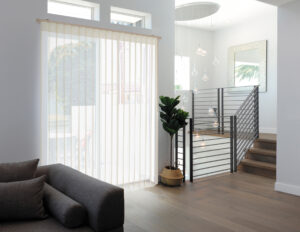
Vertical blinds remain a dependable option for large sliding glass doors. Individual vanes hang from a headrail and rotate to control light. The entire covering can then traverse to one side when full access to the door is needed.
Modern vertical blinds are available in more finishes and styles than many homeowners expect. Depending on the collection, choices may include fabric, vinyl, embossed textures, neutral colors, wood-inspired finishes, and materials designed to coordinate with other blinds or shades in the home.
The ability to rotate the vanes is one of their greatest advantages. Homeowners can redirect sunlight without opening the entire treatment. This can be helpful when bright light enters the room but complete privacy is unnecessary.
Vertical blinds may be especially practical for busy households, rental properties, family rooms, and casual living spaces. They can cover very wide doors without requiring the homeowner to manage a large piece of fabric. When made from easy-care materials, the vanes can also be wiped down individually.
For homeowners prioritizing adjustability, straightforward operation, and value, vertical blinds can be some of the best window treatments for sliding glass doors in Eastern Iowa homes.
What to Consider With Vertical Blinds
Not all vertical blinds provide the same performance. The quality of the headrail and operating components matters because the treatment will be moved regularly. Proper measurements also help the vanes hang evenly, clear the floor, and avoid interfering with the door handle.
The direction of the stack should correspond with the door’s opening. If the active glass panel is on the right, for example, the treatment may need to stack on the left so that the vanes do not obstruct the passageway.
Homeowners with children or pets should discuss safe operating options and material durability during their consultation. The goal is to choose a treatment suited to the household rather than selecting one based only on its showroom appearance.
Vertical Cellular Shades for Added Insulation
Cellular shades are known for their honeycomb-shaped air pockets, which are designed to add a layer of insulation at the glass. While many people associate cellular shades with standard windows, vertical cellular configurations are available for sliding doors and other broad openings.
Instead of lifting from the bottom, a vertical cellular shade moves horizontally across the door. It can collapse into a compact stack when open, preserving access and outdoor views. When closed, its pleated material creates a soft, uniform surface.
These shades can be particularly valuable in rooms where comfort is a major concern. A large patio door near a dining table, sectional, desk, or reading chair may create noticeable temperature differences. Adding a cellular layer can help reduce the direct effect of hot or cold glass on the surrounding area.
For homeowners concerned about seasonal comfort, vertical cellular shades may rank among the best window treatments for sliding glass doors. Their combination of insulation, compact stacking, and understated style suits many Iowa homes.
Fabric opacity remains important. Light-filtering cellular materials brighten a space with diffused sunlight, while room-darkening selections provide stronger privacy and light reduction. Because the appearance can change as daylight passes through the material, viewing samples beside the actual door is helpful.
Roller Shades for a Clean, Streamlined Look
Roller shades can offer an appealing solution when a sliding door is divided into multiple sections or when the installation conditions support separate shades. Their simple construction and broad fabric selection make them popular in both modern and traditional interiors.
A roller shade raises into a compact roll above the glass. This preserves a clear view and keeps the treatment away from the walking path when open. Depending on the width of the door, the installation may use multiple shades rather than one oversized treatment. Separate shades can also allow the homeowner to cover one section of glass while leaving another exposed.
Solar roller materials are useful in rooms affected by glare or strong sunlight. These fabrics reduce brightness and ultraviolet exposure while maintaining different levels of outward visibility. The openness factor of a solar fabric affects how much light and view pass through it. A design professional can explain how the material will look during the day and how exterior darkness may affect privacy at night.
Room-darkening roller fabrics are better suited to spaces requiring maximum privacy. Light-filtering materials create a softer glow and may be appropriate for dining rooms, kitchens, or living areas where natural light is still desired.
Roller shades may be among the best window treatments for sliding glass doors when homeowners want minimal visual bulk, coordinated fabrics, and the option to add motorized operation.
Sliding Shutter Panels for Architectural Character
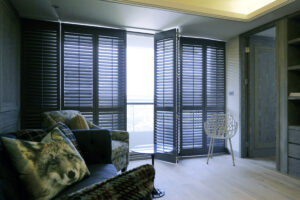
Shutters provide structure, durability, and a built-in architectural appearance. For sliding glass doors, shutter panels can be designed to move along a bypass track. One panel slides behind or in front of another, allowing access to the door without requiring hinged panels to swing into the room.
The louvers can tilt to manage daylight, privacy, and outdoor visibility. This gives homeowners more control than a covering that is either completely open or completely closed. Shutters can also create a polished transition between a patio door and shutter-covered windows elsewhere in the room.
Because shutters are a substantial treatment, the surrounding space must be evaluated carefully. Bypass panels require depth and adequate room for the panels to overlap. Door handles, trim, baseboards, and nearby furniture can affect the final configuration.
For traditional, farmhouse, transitional, and coastal-inspired interiors, sliding shutter panels can be some of the best window treatments for sliding glass doors. They provide a furniture-like finish and can become a lasting part of the room’s architecture.
The chosen louver size, frame style, finish, and panel layout should relate to the proportions of the door. Professional measuring is especially important because small alignment issues can become highly visible across such a large installation.
Draperies for Softness, Color, and Full Coverage
Draperies bring softness and movement to a large expanse of glass. They can make a tall sliding door feel more integrated with the rest of the room while introducing texture, pattern, and color. When mounted above and beyond the door frame, drapery panels can also make the opening appear taller and wider.
A traversing drapery system allows the panels to move across the rod or track more easily than decorative stationary panels. The direction in which the fabric opens should be chosen based on the active door panel and available wall space.
Fabric selection affects both appearance and performance. Lighter materials can softly filter daylight, while lined or heavier fabrics provide stronger privacy and room darkening. A lining may also improve the way the fabric hangs and help protect the face material from sun exposure.
Draperies can be layered with another treatment when greater versatility is desired. For example, a functional shade can manage daily sunlight while drapery panels add softness and design presence. The combination must be planned carefully so that the layers do not crowd the doorway or interfere with its operation.
For homeowners who want a tailored, luxurious, or inviting result, draperies may be among the best window treatments for sliding glass doors, particularly in living rooms, formal dining spaces, and primary bedrooms.
Motorized Treatments for Convenient Daily Operation
The size of a sliding glass door makes convenience an important consideration. Large treatments can require more effort to move than coverings on standard windows, especially when they are tall, wide, or located behind furniture.
Motorization allows compatible shades or draperies to open and close using a remote, wall control, app, or other available smart-home integration. This can make regular adjustments easier and encourage homeowners to use their treatments consistently rather than leaving them in one position all day.
Scheduled operation may help manage sunlight during predictable times. A west-facing shade could close before the strongest afternoon glare reaches the room, then reopen later. Automated routines may also provide a lived-in appearance when the homeowners are away.
Motorized operation eliminates accessible dangling cords, helping create a cleaner appearance and supporting homes with children or pets. It can also improve usability for older adults and people with limited mobility.
When convenience and consistent light management are priorities, motorized options can transform the best window treatments for sliding glass doors into treatments that respond more naturally to everyday routines.
Not every material or door configuration supports the same automation features. Power sources, treatment size, controls, and compatibility should be discussed during the design consultation.
Choosing the Right Opacity and Privacy Level
The appearance of a fabric sample does not tell the entire story. Its opacity determines how much light passes through the treatment and how much privacy it provides.
Sheer and Solar Materials
Sheer and solar materials reduce glare while maintaining a connection to the outdoors. They are often selected for living spaces with attractive views. However, a fabric that provides daytime privacy may become more transparent at night when interior lights are on. Homeowners should understand this effect before choosing a material for a room that requires evening privacy.
Light-Filtering Materials
Light-filtering treatments soften incoming sunlight and reduce direct views through the glass. They keep the room feeling bright without leaving the door completely exposed. Their exact privacy level varies by fabric, weave, and color.
Room-Darkening Materials
Room-darkening materials provide stronger light reduction and privacy. They can be appropriate for bedrooms, media rooms, or patio doors facing nearby homes. Small amounts of light may still appear around the perimeter or between separate treatment panels.
The best window treatments for sliding glass doors should match how the room is used throughout the entire day. A fabric that works perfectly at noon may not deliver enough privacy after sunset, making an in-home evaluation especially valuable.
Coordinate the Sliding Door With Nearby Windows
Sliding glass doors frequently share a wall or open-concept space with standard windows. The treatments do not need to be identical, but they should relate to one another.
A panel track shade can coordinate with roller shades made from the same or a similar fabric. Vertical cellular shades can complement traditional cellular shades on nearby windows. Sliding shutter panels can match shutter installations throughout the room. Draperies can repeat colors already used in shades, upholstery, or architectural finishes.
Coordination is especially helpful in larger living areas where the kitchen, dining area, and family room are visible at once. Repeating a material, color, texture, or design detail creates continuity without forcing every opening to use the same treatment style.
A designer can also help account for differences in sunlight. Two windows in the same room may need different opacity levels because one receives direct western sun while the other remains shaded. Coordinating colors with varied performance materials can create a cohesive appearance while addressing each opening properly.
Account for Children, Pets, and Everyday Traffic
Patio doors are active areas. Children may move through them while playing outside, pets may brush against the treatment, and guests may not immediately understand how a specialized covering operates. Durability and simplicity should therefore be part of the selection process.
Cordless and motorized systems can reduce accessible operating cords. Treatments that stack completely away from the active door can also help keep the passage clear. Easy-care materials may be beneficial near kitchens, dining areas, and backyards where moisture, dust, fingerprints, or pet hair are more common.
Homes with energetic pets may require different materials than homes where the door is used occasionally. A designer should know how the household lives so that durability can be considered alongside appearance.
In a busy family home, the best window treatments for sliding glass doors are not merely the most attractive options. They are treatments everyone can operate comfortably and that can withstand realistic daily use.
Why Professional Measuring Matters
Sliding glass doors may appear rectangular and straightforward, but several details can complicate installation. Door handles may project into the treatment area. Trim can vary in depth. Floors and ceilings may not be perfectly level. Baseboards, vents, crown molding, adjacent walls, and furniture can affect the available mounting space.
A treatment mounted too low may drag across the floor. One mounted too close to the glass could interfere with the handle. Incorrect stacking direction may place the entire covering in front of the active door. Even a small measurement error can be noticeable when repeated across a wide opening.
Professional measuring helps determine:
- The correct width and height
- Inside- or outside-mount feasibility
- Required floor clearance
- Available stacking space
- Appropriate track placement
- Door-handle clearance
- Left, right, or split-draw operation
- Potential motorization and power needs
Made in the Shade – Eastern Iowa provides professional measuring and installation so the treatment is designed for the specific door rather than adapted from assumptions.
Comparing the Leading Sliding-Door Options
Each treatment category offers a distinct combination of style and performance.
Panel track shades are ideal for broad fabric panels and contemporary design. Vertical blinds provide precise vane rotation and practical coverage. Vertical cellular shades add an insulating honeycomb construction. Roller shades create a simple profile and offer extensive fabric choices. Sliding shutter panels bring structure and architectural character. Draperies introduce softness and can support highly customized designs. Motorization improves the convenience of compatible shades and drapery systems.
There is no single material that is perfect for every patio door. The best window treatments for sliding glass doors depend on the homeowner’s priorities, the room layout, the door’s direction of travel, and the amount of sunlight the glass receives.
A household primarily concerned with winter comfort might prefer a vertical cellular shade. Someone focused on a contemporary appearance may favor panel tracks or roller shades. Homeowners seeking flexible louver control could choose vertical blinds or shutters, while those wanting softness and a customized finish may be drawn to draperies.
Local Window Treatment Guidance Across Eastern Iowa
Homes across Eastern Iowa vary widely, from historic properties and traditional suburban houses to new construction, condominiums, and contemporary homes. Sliding-door solutions should reflect those differences.
In Iowa City and North Liberty, homeowners may want clean treatments that complement open layouts and modern finishes. Cedar Rapids families may prioritize durability, insulation, and simple everyday operation. In Davenport, Bettendorf, and throughout the Quad Cities, controlling sunlight and privacy can be especially important for patio doors facing neighboring homes, open landscapes, or the river corridor. Tiffin’s continued residential growth also means many homeowners are selecting treatments for newly built spaces with expansive glass.
An in-home consultation allows samples to be viewed against the home’s flooring, wall colors, cabinetry, furniture, and natural light. It also gives the designer an opportunity to see how the door opens, where the treatment can stack, and whether nearby windows should be coordinated.
Made in the Shade – Eastern Iowa offers blinds, shades, shutters, draperies, motorization, exterior shades, and awnings. That broad selection makes it possible to coordinate indoor sliding-door treatments with other window and outdoor-living solutions throughout the property.
Schedule a Complimentary In-Home Consultation
Selecting a sliding-door covering becomes much easier when you can compare materials in the room where they will be installed. Color, texture, opacity, and scale can look very different in your home than they do online or under showroom lighting.
During a consultation, Made in the Shade – Eastern Iowa can help you explore the best window treatments for sliding glass doors based on your privacy needs, style, budget, sunlight exposure, and daily routines. You can compare panel tracks, vertical blinds, cellular options, roller shades, shutters, draperies, and available motorized systems while receiving guidance specific to your door.
Made in the Shade – Eastern Iowa proudly serves Iowa City, Davenport, Bettendorf, the Quad Cities, Cedar Rapids, North Liberty, Tiffin, and surrounding areas. Call 563-726-8040 to schedule your complimentary in-home consultation and discover a sliding glass door solution designed for the way you live.

