
Summer in Eastern Iowa brings long daylight hours, intense afternoon sunshine, and plenty of heat and humidity. Although air conditioning provides relief, it should not have to overcome an endless stream of solar heat entering through uncovered or poorly covered windows. Learning how to keep your home cooler with window treatments can help you create more comfortable rooms, reduce glare, protect furnishings, and make better use of your cooling system. With custom solutions from Made in the Shade – Eastern Iowa, homeowners can address the direction, dimensions, and daily demands of every window rather than relying on one generic covering throughout the house.
Made in the Shade – Eastern Iowa serves Iowa City, Davenport, Bettendorf, the Quad Cities, Cedar Rapids, North Liberty, Tiffin, and surrounding communities. Our collection includes custom blinds, shades, shutters, draperies, motorized window treatments, exterior shades, and awnings. Whether your home has large west-facing windows, a sunny patio door, an exposed home office, or an outdoor living area that becomes uncomfortable by midday, we can help you find a solution suited to your space.
Why Eastern Iowa Homes Become So Warm in the Summer
Understanding how to keep your home cooler with window treatments begins with recognizing how sunlight affects indoor temperatures. Solar energy passes through the glass and warms floors, walls, furniture, and other surfaces. Those materials retain the heat and release it gradually, causing a room to remain warm even after direct sunlight has moved away from the window.
This effect can be especially noticeable during an Eastern Iowa summer. Large windows may be desirable for their outdoor views and natural light, but they can also expose the interior to significant heat gain. East-facing rooms receive strong morning sunshine, while west-facing windows are often affected during the hottest part of the afternoon. South-facing windows can receive prolonged sun exposure throughout the day.
Homes in Iowa City, Cedar Rapids, Davenport, and nearby communities include a wide variety of architectural styles, window sizes, and orientations. A newer home with expansive glass may experience different challenges than an older property with smaller windows or limited insulation. That is why a room-by-room evaluation is more effective than assuming the same window treatment will provide identical results everywhere.
How Window Treatments Help Control Solar Heat
The central principle behind how to keep your home cooler with window treatments is controlling solar heat before it spreads through the room. An effective covering can reflect, filter, absorb, or block part of the sunlight entering through a window. Certain products also create an insulating layer between the glass and the interior, helping reduce heat transfer.
The effectiveness of a window treatment depends on several factors:
- The material, color, and opacity of the covering
- How closely the treatment fits the window
- Whether the product is mounted inside or outside the window opening
- The direction the window faces
- The time of day the window receives direct sunlight
- Whether the treatment is opened and closed consistently
- Whether an exterior product can stop sunlight before it reaches the glass
Custom window treatments are particularly valuable because gaps around an undersized or poorly fitted covering can allow bright light and heat to enter. Precise measuring and professional installation can improve coverage while giving the finished room a cleaner, more intentional appearance.
Cellular Shades Add an Insulating Layer
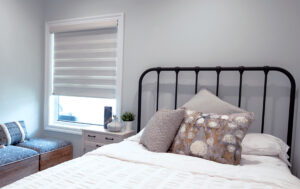
For homeowners researching how to keep your home cooler with window treatments, cellular shades are one of the most practical products to consider. Also called honeycomb shades, these coverings contain fabric cells that trap air near the window. This cellular structure creates an insulating barrier that helps slow heat transfer between the glass and the room.
Cellular shades are available in different cell sizes, fabrics, colors, and opacities. A light-filtering fabric can soften harsh sunshine while preserving a bright atmosphere. A room-darkening option can provide stronger light control in bedrooms, nurseries, media rooms, or other areas where reducing brightness is a priority.
These shades work well in many Eastern Iowa homes because they provide energy-conscious performance without requiring a bulky design. When raised, they stack neatly near the top of the window. When lowered, they offer broad, even coverage. Options may also be available for specialty windows, skylights, and unusually shaped openings.
Top-down/bottom-up operation can provide additional flexibility. The shade can be lowered from the top to admit daylight while the lower portion remains covered for privacy and solar control. This configuration may be useful in bathrooms, bedrooms, and street-facing rooms in neighborhoods throughout North Liberty, Tiffin, Iowa City, and Cedar Rapids.
Roller Shades Provide Clean and Flexible Solar Control
Another important part of how to keep your home cooler with window treatments is choosing a product that occupants will use consistently. Roller shades have a streamlined design and simple operation, making them an appealing option for contemporary interiors, open floor plans, home offices, and large banks of windows.
Roller shade fabrics are available in a range of opacity levels. More open fabrics allow greater visibility and daylight, while tighter or more opaque materials provide increased light and privacy control. Light-colored materials may help reflect a portion of incoming sunlight, while room-darkening fabrics can provide more substantial coverage where it is needed.
Because roller shades have relatively few visible components, they coordinate easily with a variety of interior styles. They can remain understated or introduce color, texture, and pattern. A carefully selected fabric can reduce glare on televisions and computer screens while helping a room feel less exposed to direct sunshine.
Roller shades may be used independently or paired with custom draperies. The roller shade handles daily light control, while the drapery adds softness, depth, and another layer of coverage. This combination can be particularly useful in living rooms, bedrooms, and larger gathering spaces.
Solar Shades Reduce Glare While Preserving the View
Solar shades offer a specialized answer to how to keep your home cooler with window treatments, particularly when maintaining an outdoor view is important. These shades use performance fabrics designed to reduce glare and filter solar energy. Depending on the selected fabric and openness level, occupants may still be able to see outside while receiving relief from intense sunlight.
A lower openness factor generally provides greater glare and UV control, along with increased daytime privacy. A higher openness factor preserves more of the view and admits more natural light. The best choice depends on the window’s orientation, the intensity of the sun, the desired visibility, and how the room is used.
Solar shades can be a strong choice for homes near open landscapes, waterways, golf courses, or scenic areas throughout Bettendorf, Davenport, and the Quad Cities. They are also useful in home offices where direct sunlight makes screens difficult to see. By reducing glare without completely eliminating daylight, solar shades can make a workspace more comfortable and functional.
It is important to remember that solar shades are not usually designed to provide complete nighttime privacy. When indoor lights are on after dark, visibility may reverse. If privacy is a major concern, solar shades can be combined with another covering or selected as part of a layered window treatment plan.
Shutters Offer Durable, Adjustable Coverage
When considering how to keep your home cooler with window treatments, custom interior shutters provide a durable option with precise control over light and privacy. Their adjustable louvers can be tilted to redirect sunlight away from the room while still permitting ventilation or partial outdoor visibility.
Closing the louvers during periods of intense sun creates a substantial barrier over the window. The solid frame and fitted panels also contribute to a sense of separation between the glass and the interior. Although performance depends on the shutter material, window construction, and installation, this fitted design can help a room feel more protected from direct solar exposure.
Shutters are especially appealing to homeowners who want a window treatment that looks integrated with the architecture. They can complement traditional, transitional, farmhouse, and contemporary interiors. Because they are constructed specifically for each opening, they may also be suitable for arches, angles, and other specialty window shapes.
In addition to summer light control, shutters offer year-round benefits. Their louvers can be adjusted throughout the day, opened fully when more natural light is desired, or closed for privacy. That versatility makes them a long-lasting option for living rooms, bedrooms, kitchens, bathrooms, and street-facing windows.
Blinds Let You Redirect Direct Sunlight
A practical approach to how to keep your home cooler with window treatments does not always require blocking every ray of natural light. Custom blinds allow homeowners to tilt the slats and redirect sunlight, helping reduce direct exposure while keeping the room from feeling completely closed off.
Horizontal blinds work well on many standard windows, while vertical blinds may be appropriate for patio doors, sliding glass doors, and wide openings. Material choices, slat sizes, finishes, and colors allow blinds to coordinate with both the room and the level of light control required.
During the brightest portion of the day, slats can be angled so sunlight is directed toward the ceiling rather than onto floors, furniture, or seating areas. This adjustment can reduce uncomfortable brightness and help limit the warming effect of direct sun. Later in the day, the blinds can be opened to restore the view and natural light.
The fit of the blind matters. A custom product is measured for the specific window, helping minimize unwanted gaps and improve the appearance of the installation. Homeowners can also explore cordless and motorized operating options for easier, more convenient control.
Draperies Add Beauty and Another Layer of Protection
Draperies are often selected for their decorative impact, but they also play a meaningful role in how to keep your home cooler with window treatments. Full, properly sized drapery panels can cover the window and surrounding gaps, creating an additional barrier against bright sunlight and solar heat.
Fabric selection strongly affects performance. Lighter fabrics can gently filter sunshine, while lined or room-darkening draperies offer greater coverage. Adding an appropriate lining can improve privacy, help protect the face fabric, and strengthen the drapery’s light-control capabilities. The width and length of the panels also matter because fuller coverage can reduce the amount of exposed glass.
Draperies are especially effective when layered with blinds or shades. During moderate daylight, the underlying treatment can manage glare while the drapery remains open. During the hottest hours, both treatments can be closed for more complete coverage. This layered arrangement also gives homeowners greater control over privacy, light, and visual style.
Custom draperies can be tailored to the proportions of the room rather than restricted to standard retail lengths. They may be installed to emphasize ceiling height, frame a beautiful view, or soften the appearance of a large wall of windows. Homeowners can choose from numerous fabrics, colors, patterns, headers, and decorative hardware options.
Exterior Shades Stop Sunlight Before It Reaches the Glass
One of the most effective strategies for how to keep your home cooler with window treatments is intercepting sunlight on the exterior of the home. Interior coverings manage solar energy after it passes through the glass, but exterior shades can block a portion of that energy before it reaches the window.
Exterior shades are well suited to windows, patios, porches, and outdoor living spaces that receive intense sun. Depending on the product and fabric selected, they can reduce glare, provide shade, and create a more comfortable transition between indoor and outdoor areas. They may be especially useful on western exposures where afternoon sunlight is strongest.
For homes in Davenport, Bettendorf, Iowa City, or Cedar Rapids with covered patios or screened outdoor areas, exterior shades can help extend the usable hours of the space. Instead of avoiding the patio during the hottest part of the day, homeowners can lower the shade when needed and raise it when conditions become more comfortable.
Exterior products must be selected with wind, weather exposure, mounting conditions, and the architecture of the home in mind. A professional consultation helps determine whether an exterior shade is appropriate for a particular opening and which operating system will be most practical.
Awnings Create Shade for Windows and Outdoor Areas
Awnings provide another exterior approach to how to keep your home cooler with window treatments by creating shade above windows, doors, patios, or decks. By reducing the amount of direct sunlight that reaches the glass or outdoor surface, an awning can help protect the adjacent space from intense solar exposure.
Retractable awnings offer flexibility because they can be extended when shade is needed and retracted during mild weather or when occupants want more sunlight. They can make a deck or patio more inviting for outdoor meals, entertaining, reading, or relaxing. Depending on the location and design, an awning may also shade nearby windows and doors.
This solution is particularly valuable for homes with limited natural shade from trees or neighboring structures. Newer developments in North Liberty and Tiffin, for example, may contain open lots where decks and patios receive substantial direct sun. An appropriately sized awning can introduce dependable shade without permanently enclosing the area.
Fabric color, pattern, awning projection, placement, and operating method can all be coordinated with the exterior of the home. Professional planning is important because the awning must be securely mounted and sized for the intended area.
Motorization Keeps Window Treatments Working on Schedule
Consistency is a major part of how to keep your home cooler with window treatments. Even the most effective shade cannot control afternoon sun if it remains open while everyone is away. Motorization makes it easier to adjust hard-to-reach coverings, coordinate multiple windows, and operate treatments at the appropriate time of day.
Motorized blinds and shades can be especially useful for tall windows, windows behind furniture, and large groups of openings. Instead of moving from room to room to adjust each treatment, homeowners may be able to operate several products with a remote, wall control, app, or compatible smart-home system, depending on the selected equipment.
Scheduled operation can support a simple summer routine. East-facing shades may close before strong morning sun reaches the room. South- and west-facing treatments can lower later in the day. In the evening, the coverings can reopen or move to a privacy position.
Motorization is not limited to new construction or highly automated homes. It can be incorporated into many remodeling and replacement projects. During a consultation, Made in the Shade – Eastern Iowa can explain available power options, controls, product compatibility, and how motorization may fit into the household’s daily routine.
Choose Treatments According to the Direction of the Window
Applying how to keep your home cooler with window treatments effectively requires more than selecting one attractive product. Window orientation has a major influence on when solar heat and glare become most noticeable.
East-Facing Windows
East-facing rooms receive strong morning sunlight. Bedrooms, breakfast areas, and home offices on this side of the house may become bright and warm early in the day. Cellular shades, roller shades, shutters, blinds, and lined draperies can all provide useful control, depending on the desired appearance and degree of darkness.
West-Facing Windows
West-facing windows often create the greatest summer challenge because they receive direct sunlight during the warmer afternoon and early evening hours. More substantial coverage, layered treatments, solar shades, exterior shades, or awnings may be appropriate for these openings.
South-Facing Windows
South-facing windows may receive extended daylight, making flexible control important. Adjustable blinds, shutters, solar shades, or motorized treatments can help homeowners respond to changing light throughout the day.
North-Facing Windows
North-facing rooms typically receive softer indirect light, but they can still experience heat transfer through the glass. An insulating shade or layered treatment can contribute to year-round comfort, especially around older or less efficient windows.
Plan Window Treatments Room by Room
A room-by-room plan is often the most successful way to determine how to keep your home cooler with window treatments. Each part of the home has different priorities, and the product with the highest level of insulation is not automatically the best fit for every opening.
Living Rooms and Great Rooms
Living rooms often contain the home’s largest windows. The goal may be to reduce glare and heat while preserving the view. Solar shades, roller shades, motorized shades, shutters, or layered treatments can provide flexible coverage without diminishing the room’s architectural appeal.
Bedrooms
Bedrooms usually require a balance of temperature control, privacy, and darkness. Cellular shades, room-darkening roller shades, shutters, and lined draperies can help create a more restful environment. Motorized treatments may also be scheduled to close before afternoon heat builds and open gradually in the morning.
Kitchens and Dining Areas
Kitchens need treatments that fit safely around counters, sinks, and cooking areas. Blinds, shutters, roller shades, and cellular shades can offer clean, controlled coverage. Materials should be selected with humidity, cleaning, and daily operation in mind.
Home Offices
Screen glare can make working from home uncomfortable. Solar shades and roller shades can reduce intense brightness while maintaining natural light. Adjustable blinds or shutters can redirect sunshine as it moves throughout the day.
Patio and Sliding Doors
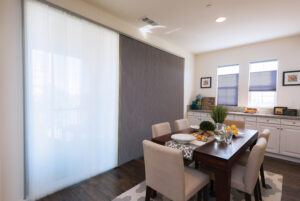
Wide doors require treatments that are easy to operate and do not interfere with regular access. Vertical blinds, sliding panels, draperies, and certain shades can be configured for these openings. Exterior shades or awnings may also protect the patio and adjacent indoor space from direct sun.
Sunrooms and Enclosed Porches
Rooms with multiple windows may need coordinated treatments on several sides. Motorization can make frequent adjustments more practical, while solar or cellular shades can address glare and heat without overwhelming the design.
Use a Daily Summer Window-Treatment Routine
Knowing how to keep your home cooler with window treatments is most helpful when the strategy becomes part of the household’s routine. Window coverings should respond to the sun rather than remain in one position all day.
In the morning, close or lower treatments on windows receiving direct eastern sun. As the sunlight shifts, adjust coverings on southern and western exposures. Keep treatments closed during the hours when a room is unoccupied, particularly if that room receives strong sunlight. Reopen them after the direct sun has moved away if you want more daylight or a clearer outdoor view.
Motorized products can simplify this routine, but manually operated treatments can also be effective when used consistently. Household members should understand which rooms experience the greatest heat gain and approximately when the problem occurs.
Ceiling fans, properly maintained air-conditioning equipment, weather sealing, and thoughtful thermostat settings can complement the work performed by window coverings. The goal is to reduce unnecessary solar heat while supporting the home’s overall comfort system.
Why Custom Window Treatments Make a Difference
Custom treatments are made for the actual dimensions and conditions of each opening. This is especially important when exploring how to keep your home cooler with window treatments, because excessive gaps, insufficient width, or the wrong mounting method may reduce the amount of usable coverage.
A professional consultation also helps homeowners compare products based on more than appearance. The consultant can evaluate window direction, room function, privacy requirements, preferred operation, decorating style, and budget. For exterior products, mounting conditions and weather exposure can also be considered.
Made in the Shade – Eastern Iowa brings samples into the home, allowing clients to view materials alongside their flooring, wall colors, furniture, and natural light. This makes it easier to see how a fabric or finish will look in the actual space rather than under showroom lighting.
Professional measuring reduces uncertainty, particularly for large windows, specialty shapes, patio doors, and homes where window dimensions vary from room to room. Professional installation helps ensure that the finished products operate properly and look polished.
Local Window-Treatment Solutions for Eastern Iowa Homes
The best answer to how to keep your home cooler with window treatments should reflect the home’s location, construction, window orientation, and the way each room is used. An Iowa City home with mature trees may need targeted coverage on only a few exposed windows, while a newer home in North Liberty or Tiffin may receive direct sunlight across an open lot. A property in Davenport or Bettendorf may need to preserve a scenic view while reducing glare, and a Cedar Rapids homeowner may want additional insulation around older windows.
Made in the Shade – Eastern Iowa proudly works with homeowners throughout:
- Iowa City
- Davenport
- Bettendorf
- The Quad Cities
- Cedar Rapids
- North Liberty
- Tiffin
- Surrounding Eastern Iowa communities
Our selection of blinds, shades, shutters, draperies, motorized treatments, exterior shades, and awnings allows us to recommend solutions for individual windows as well as coordinated whole-home projects. We can help you compare materials, opacity levels, operating systems, colors, and layering options based on your priorities.
Schedule a Complimentary In-Home Consultation
If you are ready to explore how to keep your home cooler with window treatments, begin with a complimentary in-home consultation from Made in the Shade – Eastern Iowa. We will discuss the rooms that receive the most direct sunlight, evaluate your windows, show you product samples, and help you compare solutions for light control, insulation, privacy, style, and convenient operation.
Your plan may include cellular shades for bedroom insulation, solar shades for a view-facing living room, shutters for adjustable coverage, draperies for an additional protective layer, motorized shades for tall windows, or an exterior shade or awning for an exposed patio. Every recommendation can be adapted to the layout and design of your home.
Call Made in the Shade – Eastern Iowa at 563-726-8040 to schedule your complimentary in-home consultation. Discover custom window treatments designed to help your Iowa City, Davenport, Bettendorf, Quad Cities, Cedar Rapids, North Liberty, Tiffin, or surrounding-area home feel more comfortable throughout the hottest months of the year.

