
Plantation Shutters: A Worthwhile Investment for Eastern Iowa Homes?
Plantation shutters are among the most distinctive custom window treatments available. Their broad louvers, fitted frames, and architectural appearance can transform an ordinary window into a finished design feature. They also provide adjustable light control, privacy, durability, and potential insulating benefits. Still, because custom shutters typically require a larger initial investment than many blinds or shades, homeowners often ask: are plantation shutters worth it? For many properties in Iowa City, Davenport, Bettendorf, the Quad Cities, Cedar Rapids, North Liberty, Tiffin, and surrounding Eastern Iowa communities, the answer is yes—provided the shutters fit the home, the windows, and the homeowner’s long-term priorities.
Made in the Shade – Eastern Iowa helps homeowners compare shutters with blinds, shades, draperies, motorized window treatments, exterior shades, and awnings. During a complimentary in-home consultation, we can evaluate your windows, explain material and design options, and help you determine whether custom shutters are the right investment for your space.
What Are Plantation Shutters?
Before deciding are plantation shutters worth it, it helps to understand what separates them from other window coverings. Plantation shutters are solid window treatments made with framed panels and horizontal louvers. The panels are hinged so they can swing open, while the louvers tilt to control light, privacy, and visibility.
Unlike curtains, blinds, or shades that primarily hang in front of the glass, shutters are installed within or around the window opening. Their fitted construction makes them appear more like an architectural component than an accessory. When closed, the panels cover the window. When the louvers are tilted, they can admit daylight while redirecting views into the room.
Plantation shutters generally have wider louvers than traditional shutters. The broader openings can preserve more of the outdoor view when the louvers are open while creating a clean, uncluttered appearance. Homeowners may be able to select different louver sizes, colors, frame styles, panel configurations, and operating options.
The term “plantation shutters” commonly refers to this interior louvered style, but the actual products available today may be made from wood, composite materials, vinyl, or other engineered components. The best material depends on the room, window dimensions, desired finish, moisture exposure, budget, and performance expectations.
The Main Benefits of Plantation Shutters
When homeowners ask are plantation shutters worth it, they are usually trying to determine whether the practical benefits justify the price. Shutters offer several advantages that can make them a strong long-term choice.
Adjustable Light Control
The louvers can be tilted through a range of positions, allowing you to respond to changing daylight. Open louvers provide greater brightness and visibility. Partially closed louvers can redirect direct sunlight away from furniture, floors, televisions, or computer screens. Fully closed louvers provide greater coverage.
This adjustability is particularly useful in Eastern Iowa homes with windows that receive intense morning or afternoon sun. Instead of choosing between a completely uncovered window and a fully darkened room, homeowners can fine-tune the angle of the light.
Flexible Privacy
Shutters allow you to increase privacy without necessarily eliminating every source of natural light. Louvers can be angled so occupants receive daylight while limiting direct views from the street or neighboring properties.
This feature may be valuable in closely spaced neighborhoods in Iowa City, North Liberty, Tiffin, Cedar Rapids, Davenport, and Bettendorf. It is also helpful for street-facing bedrooms, bathrooms, living rooms, and home offices.
Architectural Appearance
Because shutters are constructed for the individual opening, they look integrated with the window. Their clean lines can complement traditional, transitional, farmhouse, craftsman, and contemporary interiors.
They can also reduce the need for additional decorative treatments. Some homeowners still pair shutters with draperies to add softness, pattern, or color, but shutters can provide a complete appearance on their own.
Long-Term Durability
Quality shutters contain fewer flexible fabrics and cords than many conventional coverings. With appropriate use and maintenance, they can remain attractive and functional for many years. Their rigid construction makes them especially appealing for homeowners who do not want to replace their window treatments frequently.
Straightforward Maintenance
Plantation shutters generally do not require laundering or specialized fabric cleaning. Dust can typically be removed from the louvers and frames with a microfiber cloth, duster, or appropriate vacuum attachment. The correct cleaning method depends on the shutter material, so homeowners should follow the manufacturer’s care instructions.
How Long Do Plantation Shutters Last?
Longevity is an essential consideration when evaluating are plantation shutters worth it. A lower-priced window covering may seem more economical initially, but the calculation changes if it needs to be replaced several times while a well-made shutter remains in place.
The actual lifespan of shutters depends on their material, construction, installation, environment, and daily use. Products that are correctly sized and professionally installed are less likely to experience unnecessary stress from poor alignment or improper operation.
Homes with children or pets may also benefit from the solid construction of shutters. There is no loose fabric near the floor, and many modern shutter configurations avoid traditional dangling lift cords. However, panels and louvers must still be handled appropriately to prevent damage.
Moisture exposure should be considered when selecting materials. A product suitable for a dry living room may not be the best choice for a humid bathroom or an area near a kitchen sink. Choosing the correct shutter material for each room helps support long-term performance.
Durability does not mean shutters are indestructible. Louvers can be damaged through forceful handling, and hardware may eventually need adjustment. Nevertheless, their substantial construction often makes them a compelling option for homeowners planning to remain in their property for several years.
Do Plantation Shutters Help with Energy Efficiency?
For Eastern Iowa homeowners wondering are plantation shutters worth it, energy performance is often part of the conversation. Winters can be cold, summers can be hot and humid, and windows may contribute to temperature changes during both seasons.
When the panels and louvers are closed, shutters create an additional layer between the room and the window glass. This layer may help reduce heat transfer and limit direct solar heat entering the room. The precise benefit depends on the shutter design, fit, material, window construction, installation, and how consistently the shutters are used.
During summer, closing shutters on windows receiving direct sunlight can help keep solar energy from warming floors, furniture, and interior surfaces. West-facing windows may benefit especially from afternoon coverage. During winter, closed shutters may help create a buffer near cold glass.
The fitted frame is an important part of this performance. Large gaps around a poorly sized product allow more light and air movement around the edges. Custom measurement helps the shutter correspond to the dimensions and shape of the opening.
Shutters should not be viewed as a substitute for efficient windows, insulation, weather sealing, or properly maintained heating and cooling equipment. Instead, they can be one part of a broader strategy for improving indoor comfort.
Are Plantation Shutters Good for Light Control?
Light control frequently determines are plantation shutters worth it for a particular room. Shutters are excellent for redirecting and moderating natural light, but homeowners should understand what they can and cannot do.
Tilting the louvers upward can help send light toward the ceiling while reducing direct glare at eye level. Tilting them downward may provide another balance of daylight and privacy, depending on the window’s height and surroundings. Closing the louvers substantially reduces incoming light.
However, standard plantation shutters are not usually a true blackout treatment. Small amounts of light may enter between louvers, around panels, or near the frame. If complete darkness is a priority—such as in a nursery, bedroom for a night-shift worker, or dedicated media room—another product or a layered treatment may be more appropriate.
Shutters can be paired with room-darkening shades or draperies when greater light control is required. This approach preserves the architectural appearance of the shutters while adding another layer for sleeping, privacy, or media viewing.
In living rooms, kitchens, dining rooms, offices, and shared family spaces, the adjustable louvers often provide an appealing balance. They allow homeowners to manage glare without keeping the room dark throughout the day.
How Much Privacy Do Plantation Shutters Provide?
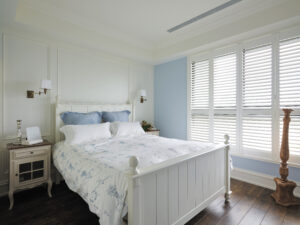
Privacy is another major factor in answering are plantation shutters worth it. When the panels and louvers are closed, shutters provide strong visual coverage. When the louvers are partially tilted, they can restrict direct views while admitting some natural light.
The best louver position depends on whether the window is located above or below the observer’s eye level. A ground-floor window facing a sidewalk may need a different angle than a second-story bedroom window.
Some shutter configurations can divide the window into independently controlled sections. With a divider rail or split-louver design, homeowners may be able to close the lower louvers for privacy while leaving the upper section open for daylight. Café-style shutters cover only the lower portion of the opening, offering another way to balance privacy and an open view.
This flexibility can work well for bathrooms, bedrooms, home offices, dining areas, and front-facing living rooms. It is also useful in neighborhoods where homes are positioned close together.
At night, closing the louvers provides greater privacy when interior lights are on. Unlike some sheer or solar fabrics that become more transparent after dark, solid shutter louvers create a more substantial visual barrier.
Do Plantation Shutters Increase Home Value?
Many people evaluating are plantation shutters worth it want to know whether shutters increase resale value. No individual window treatment can guarantee a particular selling price or financial return. Real estate values are affected by location, condition, market activity, square footage, renovations, and numerous other factors.
However, custom shutters can enhance the perceived finish and appeal of a home. Because they are fitted to specific windows and usually remain installed, prospective buyers may view them as part of the property rather than a temporary decorative item.
Neutral shutters can make windows look polished without requiring a new owner to purchase coverings immediately. Their durability, privacy, and adjustable light control may also be attractive to buyers.
The potential value is not limited to resale. Homeowners receive practical use from the shutters every day they live in the property. Comfort, privacy, visual appeal, and reduced need for replacement can all contribute to the overall return on the investment.
If resale is a significant concern, selecting a versatile color and a style that complements the home’s architecture may be preferable to choosing an unusually bold or highly personalized finish.
Plantation Shutters Versus Blinds
Comparing shutters with blinds can clarify are plantation shutters worth it for your budget and goals. Both products contain adjustable horizontal elements, but they differ substantially in construction and appearance.
Blinds have individual slats suspended within a headrail system. They can typically be raised to uncover most of the glass and tilted to adjust light. Shutters have rigid panels and a surrounding frame. The louvers tilt, while the panels swing open when full access to the window is desired.
Custom blinds generally have a lower starting cost than shutters, making them a practical option when covering many windows within a limited budget. They are available in numerous colors, materials, and slat sizes. Their ability to lift also gives homeowners a largely unobstructed window when the blind is raised.
Shutters provide a more permanent, architectural appearance. Their solid frames and panels can create a substantial visual feature and may offer greater long-term durability. They do not lift into a compact headrail, however, so the panels must swing open when full access is needed.
The better option depends on the room and the homeowner’s priorities. Some homes use shutters in highly visible areas and blinds in secondary rooms. A whole-home plan does not have to rely on one product exclusively.
Plantation Shutters Versus Shades
Shades provide another useful comparison for homeowners asking are plantation shutters worth it. Unlike shutters and blinds, shades generally use a continuous piece of material rather than adjustable louvers.
Cellular shades can provide strong insulating performance through their air-trapping honeycomb construction. Roller and solar shades offer a streamlined appearance and can work well on large windows. Roman shades add softness and decorative fabric. Woven shades introduce natural texture.
Most shades raise and lower to control coverage. Some offer top-down/bottom-up operation, allowing daylight to enter above while maintaining privacy below. Room-darkening fabrics may also provide greater darkness than standard shutter louvers.
Plantation shutters offer more precise directional control because the louvers can be tilted without raising the entire covering. They also provide a firm, architectural appearance rather than the soft or minimal appearance of a shade.
Motorization may be more widely available across certain shade categories, making shades appealing for tall, inaccessible, or grouped windows. The available options depend on the product and manufacturer.
The choice does not need to be the same in every room. Shutters may be ideal for front-facing windows, while cellular shades could be chosen for bedrooms and solar shades for a large view-facing living room.
Plantation Shutters Versus Draperies
A comparison with custom draperies also helps answer are plantation shutters worth it. These products create very different visual effects, and in some rooms they work particularly well together.
Draperies add fabric, movement, softness, color, and pattern. They can frame a window, emphasize ceiling height, or help balance the proportions of a room. With the appropriate fabric and lining, they can also contribute to privacy, light control, and insulation.
Shutters create cleaner lines and a more structural appearance. They require less fabric maintenance and do not extend onto the floor or surrounding wall. This can make them suitable for windows near built-in furniture, desks, counters, or other areas where full-length drapery panels would be impractical.
Layering shutters and draperies combines the benefits of both. The shutters handle daily privacy and sunlight, while the draperies provide decorative softness and additional coverage. This combination works especially well in bedrooms, dining rooms, formal living spaces, and primary suites.
Homeowners who prefer a minimalist interior may decide the shutters are sufficient on their own. Those seeking a fuller, more luxurious appearance may choose to add custom drapery panels.
Which Rooms Are Best for Plantation Shutters?
Room placement plays an important role when deciding are plantation shutters worth it. Although shutters can be used throughout a home, they may deliver greater value in certain locations.
Living Rooms
Shutters can provide living rooms with a polished, finished appearance while allowing occupants to manage glare and privacy throughout the day. They work particularly well on street-facing windows and openings with attractive architectural trim.
Bedrooms
In bedrooms, shutters provide privacy and substantial light control. If greater darkness is required for sleep, they can be combined with a room-darkening shade or lined drapery.
Bathrooms
The cleanability and privacy of shutters can make them appealing in bathrooms. The selected material must be appropriate for humidity and possible moisture exposure.
Kitchens
Shutters fit neatly within or around the window opening, which can be helpful over counters and sinks. Suitable materials are generally easier to wipe clean than delicate fabrics.
Dining Rooms
Their architectural quality can complement a formal dining room, casual breakfast area, or open-concept gathering space. Louvers can be adjusted to reduce glare during meals while preserving daylight.
Home Offices
Shutters allow users to redirect direct sunlight away from computer screens. Their tailored appearance also creates a professional background for video meetings.
Specialty Windows
Custom shutters may be constructed for arches, angles, circles, and other specialty shapes. Instead of concealing an unusual window, the shutter can follow its architecture and emphasize the feature.
Are Shutters Suitable for Large Windows and Patio Doors?
For homes with oversized glass, the question are plantation shutters worth it requires careful consideration of panel size, weight, access, and daily operation. Shutters can be designed for many large openings, but the configuration must be planned thoughtfully.
Multiple panels may be used across a wide window. These panels can be hinged together or arranged in sections, depending on the opening and product specifications. Divider rails can add stability while allowing upper and lower louvers to be controlled separately.
For sliding glass doors, a traditional hinged shutter may not be the most practical option because the panels require clearance to swing. Bypass or bifold shutter systems may be available, or another treatment such as vertical blinds, sliding panels, draperies, or certain shades may provide easier access.
Furniture placement also matters. A panel that cannot swing open because of a sofa, desk, or countertop may limit the homeowner’s ability to uncover the window fully. A professional in-home consultation makes it possible to examine these conditions before a product is ordered.
Made in the Shade – Eastern Iowa can compare shutters with alternative treatments so the solution supports both the appearance of the room and the way the opening is used.
Are Plantation Shutters Safe for Homes with Children and Pets?
Safety and durability can influence are plantation shutters worth it for a busy household. Shutters operate without the long, dangling lift cords associated with some older window-covering styles. Their louvers are adjusted by hand or through an operating mechanism built into the panel.
The absence of loose fabric near the floor can also be helpful in homes with pets. Shutters remain contained within the window area instead of gathering on the floor or moving in air currents.
However, no window treatment is immune to damage. Children should not climb on shutter panels, and pets should not be allowed to push through closed louvers. Panels should be opened using the intended frame or handle rather than pulled by the louvers.
A professional can explain the available operating systems and help identify configurations appropriate for the household. Products should always be used according to manufacturer instructions.
What Affects the Cost of Plantation Shutters?
Cost is often the deciding factor behind are plantation shutters worth it. Custom shutters are not priced as a single universal product. Several variables influence the total investment:
- The width and height of each opening
- The total number of windows
- Shutter material
- Louver size
- Frame style
- Number and configuration of panels
- Specialty shapes
- Custom colors or finishes
- Divider rails or split-louver controls
- Installation requirements
A small rectangular window generally requires a different investment than a large arch or a wall of connected windows. That is why an accurate estimate requires professional measurements and product selections.
Homeowners do not necessarily have to install shutters on every window at once. A phased approach may begin with the most visible or frequently used areas, such as the living room, dining room, primary bedroom, or front-facing windows. Other rooms can use coordinated blinds, shades, or draperies.
It is also important to compare long-term value rather than initial price alone. A treatment that remains functional and attractive for many years may offer greater overall value than a lower-cost product requiring more frequent replacement.
Questions to Ask Before Choosing Plantation Shutters
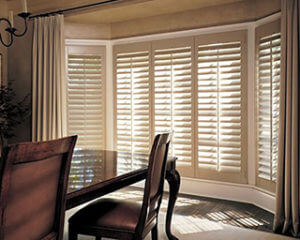
A careful evaluation can help homeowners confidently resolve are plantation shutters worth it for their property. Before ordering, consider the following questions:
How Long Do You Expect to Remain in the Home?
Homeowners planning to remain in their property for several years may receive more daily value from a durable, permanent-looking treatment. Those preparing for an immediate move may prioritize different improvements.
How Often Do You Need Full Access to the Window?
Shutter panels swing open, so clearance and furniture placement matter. Consider whether you frequently open the window for cleaning, ventilation, or emergency access.
How Dark Should the Room Become?
Shutters provide substantial light control but are not usually true blackout products. Bedrooms and media spaces may need an additional layer.
Does the Room Experience Humidity?
Bathrooms, kitchens, and other moisture-prone spaces require an appropriate shutter material.
Is Maintaining the View a Priority?
Open louvers preserve portions of the view, but the frame and panels remain visible. Homeowners seeking the least possible obstruction may prefer a shade that rolls almost entirely out of sight.
What Is the Decorating Style?
Shutters can complement many interiors, but their strong architectural presence should coordinate with the trim, furniture, and overall design.
Would Another Product Better Serve the Window?
Some large doors, inaccessible openings, or spaces requiring complete darkness may be better suited to blinds, shades, draperies, or motorized treatments.
Why Professional Measuring and Installation Matter
Even a high-quality shutter may disappoint if it does not fit or operate properly. Accurate measuring is essential because the frame and panels are built for the opening. Window depth, trim, handles, locks, tilt-in sashes, and other obstructions must be considered.
The mounting method also affects the finished appearance. An inside mount fits within the window opening and can highlight surrounding trim, but it requires sufficient depth and a reasonably square opening. An outside mount attaches around the opening and may be preferable when depth is limited or the window is irregular.
Professional installation helps ensure that frames are aligned, panels open correctly, louvers operate smoothly, and hardware is properly secured. Installers can also account for the fact that some older Eastern Iowa homes have window openings that are not perfectly square.
Made in the Shade – Eastern Iowa provides professional measuring and installation as part of a coordinated custom window-treatment experience.
Are Plantation Shutters the Right Choice for Your Eastern Iowa Home?
Ultimately, are plantation shutters worth it depends on what you expect from your window treatments. They may be an excellent investment if you value long-term durability, adjustable louvers, privacy, architectural style, easy maintenance, and a product made specifically for each opening.
Another treatment may be more appropriate if you require true blackout performance, want the covering to disappear almost completely when open, need motorized operation, or are working within a lower initial budget. In many homes, the best plan combines shutters with other products rather than using one treatment everywhere.
Made in the Shade – Eastern Iowa offers custom shutters as well as blinds, shades, draperies, motorization, exterior shades, and awnings. That broader selection allows recommendations to be based on the needs of the window rather than a predetermined product.
We proudly serve homeowners in Iowa City, Davenport, Bettendorf, the Quad Cities, Cedar Rapids, North Liberty, Tiffin, and surrounding Eastern Iowa communities. During your complimentary in-home consultation, we will bring samples to you, discuss your goals, measure your windows, and help you compare the available options in your own lighting and décor.
Call Made in the Shade – Eastern Iowa at 563-726-8040 to schedule your complimentary in-home consultation and discover whether custom plantation shutters are the right investment for your home.

