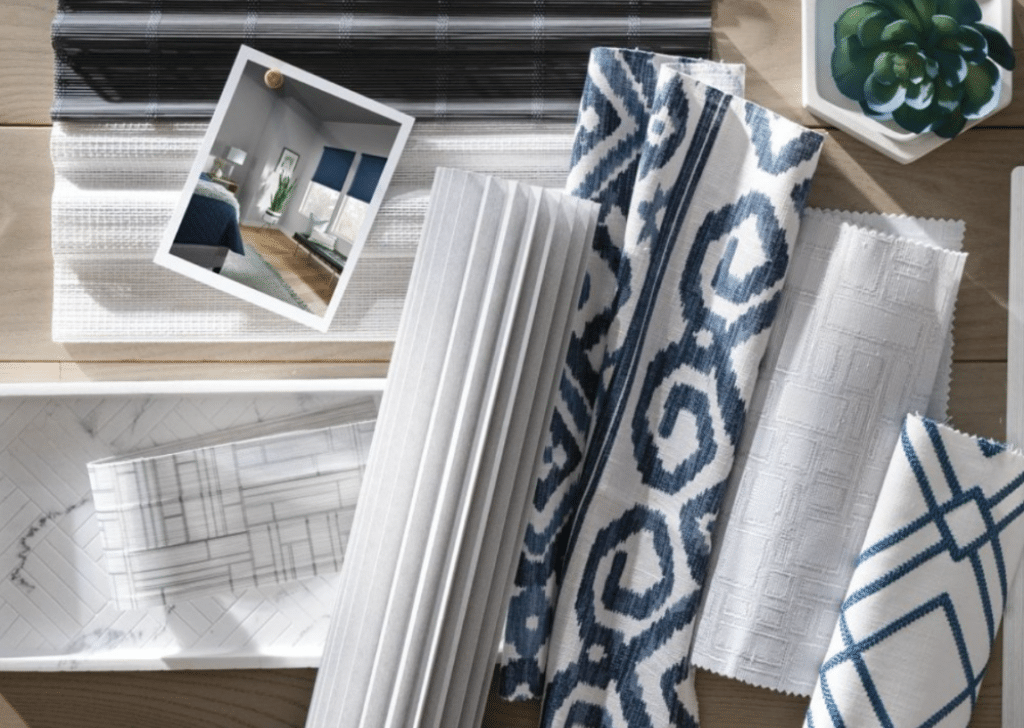
West-facing windows can fill a home with warm afternoon light and provide beautiful sunset views. They can also create intense glare, rising indoor temperatures, fading concerns, and rooms that become uncomfortable just when families are returning home for the evening. Selecting the best window treatments for west-facing windows can help Eastern Iowa homeowners enjoy the advantages of natural light while gaining greater control over heat, brightness, privacy, and comfort.
Made in the Shade – Eastern Iowa provides custom blinds, shades, shutters, draperies, motorization, exterior shades, and awnings. The company serves Iowa City, Davenport, Bettendorf, the Quad Cities, Cedar Rapids, North Liberty, Tiffin, and surrounding communities. With multiple product categories available, homeowners can choose a solution based on how a room is used rather than relying on a single treatment for every window.
Why West-Facing Windows Require Special Attention
West-facing windows generally receive their strongest direct sunlight during the afternoon and early evening. At that time, the sun sits lower in the sky, allowing bright rays to enter more directly through the glass.
This sunlight can make a living room feel excessively warm, create glare on a television, shine into a home office, or make a west-facing bedroom uncomfortable before bedtime. The effect may be particularly noticeable during the long summer days experienced throughout Eastern Iowa.
The best window treatments for west-facing windows address more than one concern. They should provide effective control over direct sunlight while remaining attractive, convenient, and appropriate for the room. The right choice may also need to preserve an outdoor view, provide evening privacy, or coordinate with existing furniture and architectural finishes.
Window size, glass type, surrounding trees, roof overhangs, and nearby buildings all affect the amount of sunlight entering a home. Two west-facing rooms can therefore require very different solutions.
Start by Identifying the Room’s Main Problem
Before comparing products, homeowners should determine exactly what happens in the room during the afternoon.
Does direct sunlight make the space noticeably warmer? Is glare the primary concern? Are furnishings exposed to hours of intense light? Does the room need greater privacy after sunset? Would the homeowner like to preserve the view while reducing brightness?
One room may have several competing priorities. A family room might need glare control for television viewing without feeling completely closed off. A bedroom may require stronger light blocking and greater privacy. A kitchen may need a durable treatment that can be adjusted without interfering with counters or a sink.
The answer helps narrow the available choices. A sheer treatment that gently filters light will perform differently from a room-darkening shade. A solar shade preserves more of the view than a closed cellular shade, while shutters offer a distinct type of directional control.
Solar Shades for Glare and View Preservation
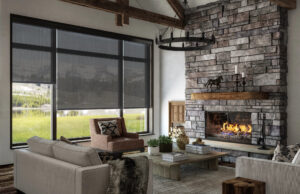
Solar shades are frequently considered for west-facing windows because they are designed to reduce glare and manage solar exposure. They use a specialized woven material that filters sunlight while preserving varying degrees of outward visibility.
The openness factor of the fabric is an important consideration. A more open weave generally provides a clearer view but allows more sunlight through. A tighter weave delivers stronger glare control and greater daytime screening while reducing the view.
For homeowners who value sunsets or an open view across the yard, solar shades may be among the best window treatments for west-facing windows. They can soften intense afternoon brightness without making the room feel as enclosed as some opaque products.
However, solar shades do not automatically provide complete nighttime privacy. When the room is illuminated after dark, people outside may be able to see through some solar fabrics. Customers should view samples and discuss nighttime privacy expectations during their consultation.
Choosing a Solar Shade Color
The color of a solar fabric influences both its appearance and performance. Darker fabrics may offer a clearer outward view and strong glare control. Lighter fabrics can reflect more visible light and may coordinate more quietly with light walls or trim, although the view through them may appear less defined.
The right color depends on the room’s design, desired visibility, and performance goals. Samples should be evaluated in the actual window whenever possible because sunlight can make fabric look different than it does under indoor lighting.
Cellular Shades for Added Insulation
Cellular shades are constructed with pockets that trap air at the window. This design can add a layer of insulation between the room and the glass, making cellular shades a strong candidate when temperature control is a priority.
They are available in different cell sizes, colors, fabrics, and opacity levels. Light-filtering cellular shades can soften sunlight while maintaining a bright atmosphere. Room-darkening versions provide stronger light control for bedrooms, nurseries, media rooms, and other spaces where reduced brightness is important.
The best window treatments for west-facing windows often need to balance daytime comfort with evening use. Cellular shades can be lowered before the strongest afternoon sunlight reaches the room and raised later when homeowners want an unobstructed view.
Standard cellular shades block the view when closed. Homeowners who want both filtered light and access to the view may want to explore top-down/bottom-up configurations where available. These systems provide additional positioning flexibility, subject to the product’s dimensions and operating options.
Single-Cell and Double-Cell Designs
Cellular shades may be available with single-cell or double-cell construction. Double-cell designs contain additional air pockets and can offer different insulating characteristics, but they may also have a fuller profile.
The appropriate configuration depends on window depth, shade size, appearance, budget, and performance expectations. A professional can explain which options are suitable for the individual window.
Roller Shades for Flexible Light Control
Roller shades offer a clean profile and an extensive range of fabric options. Their performance depends largely on the selected material.
A light-filtering roller fabric can diffuse harsh afternoon light while allowing the room to remain bright. A more opaque material can provide substantial privacy and stronger light control. Room-darkening roller shades may be appropriate for west-facing bedrooms or media spaces.
Roller shades can be especially appealing in homes with contemporary or transitional interiors. When raised, the fabric rolls compactly into the upper portion of the window, preserving much of the view.
For homeowners seeking the best window treatments for west-facing windows, roller shades offer the ability to choose a material according to the room’s exact needs. A living area, kitchen, office, and bedroom can all use the same general shade style with different fabrics and opacity levels.
Side gaps should be discussed before ordering. A roller shade mounted inside the window frame normally leaves some space between the fabric and the sides of the opening. This is necessary for the hardware but allows small lines of light to enter. An outside mount or supplemental side-channel system may provide greater coverage in certain applications.
Roman Shades for Softness and Style
Roman shades bring texture and dimension to a window through fabric that forms folds as the shade is raised. They can be tailored, relaxed, contemporary, or traditional depending on the selected material and construction.
For west-facing rooms, the lining and fabric are crucial. A decorative fabric alone may not provide enough control over intense afternoon sunlight. Adding an appropriate lining can improve light management, privacy, and protection for the face fabric.
Roman shades may be a good fit for dining rooms, bedrooms, formal living spaces, or other areas where homeowners want the window treatment to contribute significantly to the room’s design.
Because strong sunlight can affect textiles over time, material suitability should be considered carefully. A professional can help customers compare fabrics intended for the room’s exposure and explain how linings may change the appearance and performance.
Blinds for Adjustable Slat Control
Blinds provide directional control through adjustable slats. Instead of choosing only between fully open and fully closed, homeowners can tilt the slats to redirect incoming sunlight.
This feature can be helpful with low western sun. Slats can be positioned to reduce direct glare while still admitting some daylight. The blind can also be raised when homeowners want a completely open window.
Wood blinds add natural warmth and a furniture-like finish. Alternative-wood blinds provide a similar visual effect with different performance and maintenance characteristics. Metal blinds offer slim slats and a streamlined appearance.
The best window treatments for west-facing windows should be easy to adjust as the sunlight changes. Blinds offer useful flexibility, but they are not designed to eliminate every line of light. Brightness may remain visible between the slats and around the edges, even when the blind is closed.
Selecting the Right Slat Size
Wider slats can provide a broader outdoor view when tilted open and create a substantial architectural appearance. Narrower slats may suit smaller windows or homeowners who prefer more closely spaced lines.
Window depth and product dimensions influence which slat sizes are available. Homeowners should also consider the amount of space the blind occupies when fully raised.
Interior Shutters for Durable, Architectural Control
Interior shutters are custom-fitted window treatments with adjustable louvers set within solid frames. They become an architectural feature of the room and can provide excellent control over sunlight, privacy, and views.
Louvers may be tilted to redirect afternoon sunlight without completely covering the window. Depending on the shutter configuration, homeowners may also open individual panels when they want full access to the glass or outdoor view.
Shutters can be particularly effective in west-facing living rooms, dining areas, offices, and bedrooms where durability and long-term style are priorities. Divider rails or split-tilt configurations may allow upper and lower louvers to be adjusted separately.
Among the best window treatments for west-facing windows, shutters stand out for their substantial construction and precise directional control. Their frames also cover portions of the window opening that might otherwise allow more peripheral light to enter.
Shutters are not a temporary decorative layer. Their frames, panel clearances, louver size, window depth, handles, locks, and trim must all be evaluated carefully before ordering.
Draperies for Layered Light Management
Draperies add softness, color, pattern, and visual height to a room. When designed with suitable linings, they can also provide significant control over afternoon sunlight.
A lined drapery can be drawn during the hottest or brightest portion of the day and opened later to reveal the window. Room-darkening linings may be used when stronger light reduction is desired.
Draperies can extend beyond the edges of the window, helping reduce light entering around the sides. Installing them higher and wider than the window may also create the impression of greater ceiling height and broader windows.
For west-facing rooms, the selected material should be appropriate for substantial sunlight. Linings can help protect the decorative face fabric, but all textiles may experience some change with prolonged exposure.
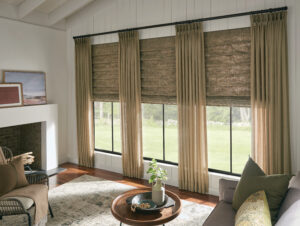
Draperies can be used alone or layered with blinds, shades, or shutters. Layering gives homeowners additional control while creating a more complete, finished appearance.
Layered Window Treatments for Maximum Flexibility
A layered design combines two treatments with different strengths. A solar shade paired with draperies, for example, can provide daytime glare reduction and stronger evening privacy. A cellular shade combined with decorative side panels can support insulation while adding softness and color.
Layering is valuable when one product cannot address every priority. West-facing rooms frequently need different levels of coverage throughout the day, making flexibility especially useful.
The best window treatments for west-facing windows may therefore involve a coordinated combination rather than a single product. The primary treatment handles daily light control, while the secondary layer supports privacy, room darkening, insulation, or decorative goals.
Layered treatments require careful planning. The window frame must have enough room for the selected products, and the controls need to remain accessible. Hardware projection, stack space, fabric fullness, and furniture placement should be considered together.
Exterior Shades Stop Sunlight Before It Reaches the Glass
Interior treatments manage sunlight after it passes through the window. Exterior shades are positioned outside, allowing them to intercept solar exposure before it reaches the glass.
This can make exterior shades particularly effective for windows that receive intense afternoon sun. The shades may be installed over individual windows or across larger openings, depending on the product and structure.
Exterior solar fabrics are available in different openness levels and colors. Like interior solar shades, they can reduce glare while preserving varying degrees of outward visibility.
Motorization can make exterior shades easier to operate, especially when they are large or used frequently. Homeowners can lower them before the hottest part of the afternoon and raise them when the sun is no longer affecting the room.
Exterior products must be selected with weather in mind. Wind limitations, mounting requirements, seasonal use, and manufacturer operating instructions are essential considerations in Eastern Iowa.
Awnings for Overhead Exterior Shade
An awning extends outward from the home to create shade above windows, doors, decks, or patios. By reducing the amount of direct sunlight reaching the window, an awning can support comfort in adjacent indoor rooms while also creating a shaded outdoor area.
Retractable awnings allow homeowners to deploy shade when it is needed and restore an open view of the sky when conditions are comfortable. Manual and motorized options may be available.
The effectiveness of an awning depends on its size, projection, mounting height, and the sun’s angle. Low western sun may still enter beneath or around the awning during part of the day, so an assessment of the property is important.
For some homes, an awning may work together with an interior treatment. The awning manages overhead exterior exposure, while a blind, shade, shutter, or drapery provides privacy and additional control inside.
Motorization Makes Timely Adjustments Easier
A high-performing window treatment can only help when it is placed in the correct position. Homeowners may intend to close their shades before the afternoon heat arrives but forget until the room is already uncomfortable.
Motorization makes adjustments faster and more consistent. Shades can be operated with a remote, wall control, application, or compatible smart-home platform, depending on the selected system.
Scheduled operation is particularly useful for west-facing windows. The shades can lower before direct sunlight reaches the glass and rise later in the evening. Timing may be adjusted seasonally as sunset and sun angles change.
For large groups of windows, motorization allows multiple treatments to move together. This creates a uniform appearance and eliminates the need to walk around the room adjusting each shade individually.
The best window treatments for west-facing windows should fit naturally into the household’s routine. Motorization can be added to several shade and drapery products, although compatibility depends on dimensions, fabric, style, power source, and manufacturer.
Protecting Furnishings from Prolonged Sun Exposure
Sunlight can affect flooring, furniture, artwork, finishes, and textiles over time. The degree of change depends on the material, exposure duration, glass, treatment, and other environmental factors.
No window covering should be expected to prevent all fading. However, consistently managing direct sunlight may help reduce prolonged exposure.
Homeowners should identify the items receiving the strongest afternoon sun. A valuable artwork, dark hardwood floor, upholstered sofa, or wood dining table near a west-facing window may need more deliberate protection than objects located deeper within the room.
Treatments with adjustable positioning allow homeowners to protect vulnerable areas during peak sunlight while opening the window at other times. Motorized schedules can make that protection more consistent.
Room-by-Room Recommendations
The room’s purpose should influence product selection as much as the window’s direction.
West-Facing Living Rooms
Living rooms often need glare reduction, view preservation, and an attractive design. Solar shades, roller shades, blinds, shutters, and layered treatments can all be considered.
If television glare is the main concern, fabric openness and opacity should be evaluated from the usual seating position. Motorization can make it easy to activate a preferred viewing setting.
West-Facing Bedrooms
Bedrooms may become warm in the late afternoon and remain uncomfortable into the evening. Cellular shades, lined Roman shades, room-darkening roller shades, shutters, or lined draperies can provide stronger coverage.
Room-darkening does not necessarily mean complete blackout. Light can enter around edges, through hardware gaps, or between movable components. Homeowners seeking the darkest possible environment should discuss mounting methods, side coverage, and layered options.
West-Facing Home Offices
An office needs controlled daylight without harsh reflections on computer monitors. Solar shades can reduce glare while maintaining a connection to the outdoors. Adjustable blinds or shutters can redirect the sunlight as its angle changes.
The treatment should also provide sufficient privacy for the location and remain easy to operate around desks and equipment.
West-Facing Kitchens
Kitchen treatments should be convenient, durable, and appropriate for the window’s proximity to sinks, counters, cooking areas, and moisture. Roller shades, solar shades, alternative-wood blinds, and other easy-to-manage products may be considered.
The treatment must not interfere with faucets, cabinet doors, window handles, or items stored on the counter.
West-Facing Dining Rooms
Dining rooms can benefit from adjustable light that creates a welcoming atmosphere without shining directly into diners’ eyes. Roman shades, shutters, blinds, roller shades, and draperies can support both comfort and style.
Light Filtering Versus Room Darkening
“Light filtering” and “room darkening” describe different performance levels.
Light-filtering treatments soften and diffuse natural light. They can reduce harsh brightness while keeping a room welcoming and illuminated. Their privacy performance varies by fabric, especially at night.
Room-darkening treatments block more light through the primary material. They are often selected for bedrooms and media rooms, but some light may still enter around the edges.
Selecting the best window treatments for west-facing windows requires realistic expectations about these categories. A light-filtering shade may make a family room more comfortable without eliminating daylight. A room-darkening material provides stronger control but removes more of the view when closed.
Homeowners should hold samples against the window rather than judging them solely from a small display. Direct western sunlight can reveal differences that are less noticeable under showroom lighting.
Inside Mounts and Outside Mounts
An inside-mounted treatment fits within the window opening. It provides a built-in appearance and leaves much of the trim visible. Sufficient depth is required, and the installer must account for handles, locks, screens, and other obstructions.
An outside-mounted treatment covers the opening and attaches to the wall or trim. It can provide broader coverage and may help reduce light entering around the edges. It is also useful when the window lacks enough depth for an inside mount.
The mounting method influences light control, view, appearance, and fit. A homeowner seeking stronger room darkening may have different mounting priorities from someone who wants to showcase decorative trim.
Accurate professional measurements help determine which approach is appropriate.
Why Custom Sizing Matters
West-facing windows may include standard openings, broad picture windows, narrow sidelights, patio doors, bay windows, or two-story glass. Each configuration presents different requirements.
Ready-made treatments may leave excessive gaps, interfere with hardware, or fail to cover the desired area. Even windows that appear identical can vary slightly in width, height, depth, or squareness.
Custom treatments are measured and ordered for the individual opening. Product specifications, control placement, mounting requirements, and fabric limitations are considered before manufacturing.
For wide windows, multiple shades may be recommended rather than one oversized treatment. This can simplify operation and align the coverings with individual window sections, although small gaps may remain between adjoining shades.
Choosing Colors for Sun-Exposed Rooms
Color influences the visual effect of a window treatment and, in some products, its performance. Light colors can create an airy appearance and coordinate easily with trim. Dark colors may add contrast and improve outward visibility through certain solar fabrics.
Strong afternoon sunlight can make colors appear warmer or more intense. A neutral that looks gray in one room might appear beige or golden in western light.
Samples should be viewed during the part of the day when the room receives direct sunlight. Homeowners should also consider how the material looks after sunset under lamps and overhead lighting.
The window treatment does not need to match every element in the room. It can coordinate with walls, flooring, furniture, cabinetry, or architectural details while maintaining its own distinct texture and character.
Questions to Ask During a Consultation
A professional consultation is an opportunity to connect product features with the actual conditions in the home. Helpful questions include:
- When does direct sunlight enter the room?
- Is glare, heat, privacy, or fading the primary concern?
- How important is preserving the outdoor view?
- Will the treatment be opened and closed every day?
- Is motorization available for the selected product?
- What fabric opacity is appropriate?
- How will the treatment perform at night?
- Will an inside or outside mount provide better coverage?
- Are exterior shades or an awning practical for the property?
- What cleaning and maintenance are required?
- Will the product interfere with window handles or furniture?
- Can multiple treatments be grouped together?
- Would layering provide better performance?
- How will the material look in direct afternoon sunlight?
Clear answers make it easier to identify the best window treatments for west-facing windows in each room rather than applying one recommendation throughout the home.
Planning for Eastern Iowa’s Seasons
The intensity and angle of western sunlight change throughout the year. Summer brings longer days and substantial afternoon exposure, while winter sunlight follows a lower path and may reach farther into the room.
Homeowners may appreciate solar control during summer but welcome additional warmth and daylight on cold winter afternoons. Adjustable treatments make it possible to respond to those seasonal differences.
Exterior products require additional weather awareness. Retractable awnings and exterior shades should be operated according to their wind, rain, snow, ice, and temperature limitations. Interior treatments remain protected from outdoor weather but still need appropriate care.
Flexible controls and motorized scheduling can help a window treatment adapt to changing seasons rather than remaining in the same position year-round.
Finding the Right Solution for Your Home
There is no single product that is automatically right for every west-facing room. Solar shades are excellent for reducing glare while preserving views. Cellular shades can support insulation. Roller and Roman shades offer numerous fabric choices. Blinds and shutters provide directional slat or louver control. Draperies add decorative softness and broader side coverage. Exterior shades and awnings address sunlight before it reaches the window.
The best window treatments for west-facing windows are the products that match the room’s sunlight, privacy needs, design, accessibility, and daily use. In some cases, one well-selected treatment is enough. In others, layering or adding an exterior solution creates the necessary flexibility.
Made in the Shade – Eastern Iowa serves homeowners in Iowa City, Davenport, Bettendorf, the Quad Cities, Cedar Rapids, North Liberty, Tiffin, and surrounding areas. Customers can explore custom blinds, shades, shutters, draperies, motorization, exterior shades, and awnings through a professional consultation.
To find the best window treatments for west-facing windows in your Eastern Iowa home, schedule a consultation with Made in the Shade – Eastern Iowa by calling 563-726-8040.