Outdoor living areas give homeowners a place to relax, entertain, dine, and enjoy fresh air without leaving home. However, strong sunlight, glare, heat, and changing weather can make a patio or deck uncomfortable during the hours when people would otherwise use it most. Exterior window treatments can help manage those conditions, but choosing the right product requires understanding how each option works.
The comparison between exterior shades vs awnings is especially important for homeowners in Eastern Iowa, where seasonal conditions can range from intense summer sunshine to wind, rain, snow, and freezing temperatures. Exterior shades and awnings can both create more comfortable spaces, but they accomplish that goal in different ways.
Made in the Shade – Eastern Iowa provides custom exterior shades, awnings, blinds, interior shades, shutters, draperies, and motorization. The company serves Iowa City, Davenport, Bettendorf, the Quad Cities, Cedar Rapids, North Liberty, Tiffin, and surrounding communities. A professional consultation can help homeowners evaluate their property, compare products, and select an outdoor solution suited to their specific needs.
Why Exterior Sun Control Matters in Eastern Iowa
An uncovered patio may feel pleasant in the morning but become hot and intensely bright by afternoon. Sunlight can reflect from pavement, water, neighboring buildings, and outdoor furniture, creating glare even when the sun is not directly overhead.
Strong sunlight can also reach interior rooms through windows and patio doors. This may contribute to uncomfortable temperatures, television glare, and prolonged exposure of flooring and furnishings to ultraviolet light.
Outdoor treatments help homeowners manage these conditions before sunlight reaches the protected area. When considering exterior shades vs awnings, the first question should be what the homeowner wants to cover. Exterior shades are generally designed to create vertical protection, while awnings extend outward to provide overhead coverage.
This difference affects the view, usable area, amount of shade, installation requirements, and protection provided at different times of day.
What Are Exterior Shades?
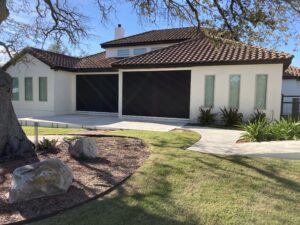
Exterior shades are installed on the outside of a window, patio opening, porch, pergola, or another suitable structure. They lower vertically to block or filter sunlight before it enters the protected area.
Many exterior shades use durable performance fabrics engineered for outdoor conditions. These materials are available in different colors, weaves, and openness levels. The fabric selection affects outward visibility, glare reduction, airflow, privacy, and the amount of sunlight passing through the shade.
Exterior shades can be operated manually or with motorization, depending on the product and installation. Motorized systems are especially convenient for wide openings, frequently adjusted shades, and areas where several shades work together.
Because they move vertically, exterior shades are often useful along the open sides of covered patios, porches, and pergolas. They can also be installed outside windows to intercept sunlight before it reaches the glass.
What Are Awnings?
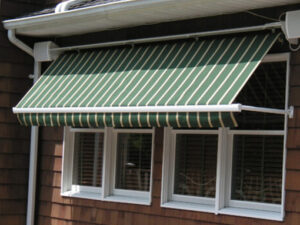
Awnings extend outward from a building or supporting structure to create overhead shade. They may be fixed in position or retractable, depending on the design.
Retractable awnings can be extended when shade is needed and retracted when homeowners want an open view of the sky. This flexibility makes them popular over decks, patios, outdoor seating areas, and doors that receive substantial sunlight.
In the discussion of exterior shades vs awnings, awnings are frequently preferred when the primary goal is to create shade over an area that does not already have a roof. An awning can transform an exposed section of a deck or patio into a more usable gathering space without permanently enclosing it.
Awning fabrics, frame finishes, dimensions, projections, and operating systems vary. The structure, mounting surface, desired coverage, sun direction, and local conditions must all be considered during product selection.
The Fundamental Difference: Vertical and Overhead Coverage
The clearest distinction between the two products is the direction in which they provide protection.
Exterior shades lower vertically. They help manage low-angle sunlight, glare, and exposure entering through the side of an outdoor area. A patio with an existing roof may still become uncomfortable when afternoon sunlight shines directly into the seating space. A vertical exterior shade can address that exposure.
Awnings project outward from the home. They create shade from above and may be a better choice for an uncovered deck, patio, or entry area. Their coverage changes with the sun’s position, the awning’s projection, and the orientation of the property.
For many homeowners comparing exterior shades vs awnings, neither product is automatically superior. The right answer depends on where the unwanted sunlight originates and whether the area already has overhead protection.
Comparing Protection Throughout the Day
Sun angles change from morning to evening and from one season to another. A treatment that works well at noon may provide less coverage when the sun is low in the sky.
An awning can create substantial shade beneath its projection during periods of higher sun. Its effectiveness may decrease when sunlight enters from the side or at a low angle. The direction the patio faces also influences the timing and location of the shade.
Exterior shades can be particularly effective against low morning or afternoon sun because they cover the vertical opening. Homeowners may lower only the shade facing the strongest sunlight while leaving other sides open.
Before choosing a system, homeowners should observe their outdoor area at several times of day. They should note where direct sunlight enters, when glare becomes uncomfortable, and which seating areas are affected. These observations provide useful information during an in-home consultation.
Which Option Is Better for an Uncovered Patio?
An uncovered patio or deck usually needs protection from sunlight coming from above. In this situation, a retractable awning may provide the most direct solution.
The awning projects from the building to create a defined shaded area. Depending on its size and location, it may cover an outdoor dining table, lounge furniture, grill-adjacent seating, or the entrance to the home.
The decision between exterior shades vs awnings becomes more nuanced when the patio receives both overhead and low-angle sunlight. An awning may make the space comfortable around midday, but strong western sun could still enter beneath the front edge in the late afternoon.
Site-specific planning is essential. The home’s orientation, available mounting height, desired projection, patio size, door placement, and nearby structures all affect the result.
Which Option Works Best for Covered Outdoor Areas?
A covered patio, screened porch, or pergola already has some form of overhead structure. The remaining challenge is often sunlight entering through open sides.
Exterior shades can lower across those openings to reduce brightness and glare. Depending on the selected fabric, they may preserve a degree of outward visibility while making the seating area feel more comfortable.
These shades can be raised when full openness is desired. This gives homeowners flexibility rather than permanently closing the sides of the structure.
For a covered area, an additional awning may not address the primary source of discomfort. A consultation can identify whether sunlight is entering below the roofline and determine which openings should receive vertical coverage.
Managing Heat Before It Reaches the Glass
Exterior shades and awnings can both help manage solar exposure at windows and doors. Because they are positioned outside the home, they intercept a portion of the sunlight before it passes through the glass.
An exterior shade may be installed close to a window, creating direct coverage across the opening. An awning can shade the window from above while leaving the lower portion open, depending on the projection and angle of the sun.
When examining exterior shades vs awnings for interior comfort, homeowners should consider the direction of the window and the time of day when the room becomes warm. A west-facing family room may need protection from lower afternoon sunlight, while a south-facing glass door could benefit from overhead shading during much of the day.
Exterior products are not replacements for insulation, efficient windows, or a properly maintained heating and cooling system. Their contribution depends on the installation, material, coverage, and environmental conditions.
Glare Control and Outdoor Visibility
Glare can make it difficult to read, use a laptop, watch an outdoor television, or hold a comfortable conversation without squinting. The right exterior product can reduce excessive brightness while allowing homeowners to continue enjoying the space.
Exterior shade fabrics are available with different openness levels. A more open weave may maintain a clearer view but allow more light through. A tighter weave can provide stronger glare reduction and greater daytime privacy, although it may reduce outward visibility.
Awnings block overhead sunlight without placing a vertical fabric panel directly in the line of sight. This can preserve a fully open view from the patio, particularly when the awning is mounted high enough.
Homeowners should decide whether uninterrupted visibility or stronger side protection is the greater priority. Viewing exterior fabric samples in the intended location can make this tradeoff easier to understand.
Privacy Considerations
Outdoor spaces can feel less relaxing when they are clearly visible from a road, sidewalk, or neighboring property. Exterior shades may help create a greater sense of separation, particularly when installed along the exposed side of a covered patio.
The level of privacy depends on the fabric, lighting conditions, and viewing angle. A material that provides useful privacy during the day may perform differently at night when the protected area is illuminated. No fabric should be assumed to provide complete privacy under every condition.
Awnings primarily create overhead coverage. Although their projection may make an area feel more sheltered, they generally do not block direct views from the side.
In a close residential setting, the choice between exterior shades vs awnings may therefore depend on whether the homeowner wants sun protection alone or a combination of shade and visual screening.
Manual and Motorized Operation
Both exterior shades and retractable awnings may be available with manual or motorized controls.
Manual systems can provide straightforward operation without relying on a powered motor. They may be suitable for smaller products or installations that will not be adjusted frequently.
Motorization allows the homeowner to extend, retract, lower, or raise the treatment using a remote, wall control, or compatible smart system. It can be especially valuable for wide products, multiple shades, or systems used several times throughout the day.
Some motorized products may support sun or wind sensors. A sun sensor can prompt the treatment to deploy when sunlight reaches a certain level. A compatible wind sensor may instruct a retractable product to close when movement or wind conditions are detected.
Sensors are helpful features, but they do not eliminate the homeowner’s responsibility to monitor weather and follow manufacturer instructions. Compatibility, settings, and operating limitations should be explained during the consultation.
Weather and Wind Considerations
Eastern Iowa weather can change quickly. Thunderstorms, gusty conditions, heavy rain, snow, ice, and temperature swings should all be considered when selecting an outdoor treatment.
Exterior shades and retractable awnings are primarily designed for sun management. Their ability to tolerate wind or moisture depends on the specific product, mounting method, dimensions, fabric, and manufacturer rating.
Guided exterior shades may include side channels, cable guides, or other systems designed to help keep the fabric controlled. Retractable awnings use supporting arms and frames that must be properly mounted and operated.
When weighing exterior shades vs awnings, homeowners should ask about wind limitations, recommended retraction practices, seasonal storage positions, and what to do when storms are expected. A product should never be left deployed in conditions beyond its stated limitations.
Snow and ice loads are also important. Retractable products should generally be closed when winter weather could accumulate on the fabric, subject to the manufacturer’s instructions. Homeowners should not attempt to operate a system that is frozen or obstructed.
Rain Protection and Realistic Expectations
Some awnings use water-resistant materials and may provide limited shelter during light rain when installed at an appropriate pitch. However, a retractable awning should not automatically be treated as a permanent roof or storm shelter.
Water can pool on improperly positioned fabric, placing stress on the awning and its mounting points. Wind-driven rain may enter from the sides, and heavy weather may require the awning to be retracted.
Exterior shades can help reduce some wind-driven exposure along the side of a covered space, but they are not solid walls. Rain may pass through or around the material depending on the fabric and conditions.
Customers should clearly explain whether their priority is shade, glare reduction, privacy, light-rain coverage, or broader weather protection. Accurate expectations are essential to choosing a product that will be satisfying in daily use.
Fabric Selection for Exterior Shades
Exterior shade fabric affects appearance, visibility, airflow, privacy, and solar control. Homeowners should compare more than color alone.
Openness refers to the amount of open space within a woven solar fabric. A higher openness level generally preserves more of the outdoor view but allows more sunlight through. A lower openness level typically provides stronger glare control and more visual screening.
Color can also influence the experience. Darker solar fabrics may provide a clearer outward view in some applications, while lighter colors may coordinate more quietly with siding, trim, columns, or other architectural features.
The ideal fabric depends on how the space will be used. An outdoor television area may need strong glare reduction, while a porch overlooking a garden may prioritize visibility. Samples should be evaluated from the intended viewing distance and under actual daylight.
Fabric and Frame Choices for Awnings
Awnings offer an opportunity to introduce color and architectural character to the exterior of the home. Fabric may coordinate with siding, roofing, brick, trim, outdoor furniture, or landscaping.
Solid neutrals can create a subtle look, while stripes and contrasting colors can make the awning a more prominent design feature. Homeowners should consider how the fabric will appear when extended and how the housing or frame will look when the awning is retracted.
Frame finish, valance style, fabric pattern, projection, and width all contribute to the finished result. The awning should feel appropriately scaled to the wall and outdoor space rather than looking undersized or overwhelming the architecture.
Professional guidance can help customers balance design preferences with the product’s structural and functional requirements.
Comparing Effects on the Home’s Appearance
Exterior shades tend to integrate into existing openings. When raised, some systems may become relatively discreet, although the roller housing and side guidance components can remain visible.
Awnings project farther from the building and usually make a stronger architectural statement when extended. Their size, color, and placement can significantly change the appearance of the patio and the exterior elevation.
The visual difference between exterior shades vs awnings should be considered from several viewpoints. Homeowners may want to evaluate the treatment from the yard, the street, adjacent rooms, and the outdoor seating area.
The selected product should coordinate with architectural details such as rooflines, trim, columns, doors, gutters, lighting, and exterior finishes. Careful placement helps the treatment look intentional rather than added as an afterthought.
Installation Requirements
Exterior products place different demands on the structure. An installer must identify a suitable mounting surface and select hardware appropriate for the application.
A retractable awning requires adequate space, mounting height, and structural support. Its arms and projection need sufficient clearance from doors, windows, lights, downspouts, rooflines, and other obstacles.
Exterior shades need a suitable upper mounting location and enough clearance for the fabric to travel vertically. Guided systems may also require secure attachment points along the sides or at the lower portion of the opening.
Electrical access must be planned when motorization is selected. Depending on the product, an electrician or other qualified professional may need to provide appropriate power before or during installation.
Because exterior systems are exposed to weather and repeated movement, accurate measuring and secure installation are essential.
Comparing Maintenance Needs
Outdoor products naturally encounter dust, pollen, insects, leaves, moisture, and changing temperatures. Routine care helps preserve their appearance and operation.
Exterior shade fabric may require occasional gentle cleaning according to the manufacturer’s instructions. Tracks, guides, and the lower rail should remain free of debris that could interfere with movement.
Awning fabric and framework should be inspected periodically for dirt, obstructions, or visible wear. Leaves and other material should not be allowed to collect on top. The awning should be fully dry before remaining retracted for an extended period whenever possible.
For either product, homeowners should avoid harsh chemicals, aggressive scrubbing, or pressure washing unless the manufacturer specifically approves those methods. Motors, sensors, controls, and mounting hardware should also be kept in appropriate condition.
When comparing exterior shades vs awnings, maintenance should be viewed as a normal part of owning an outdoor product rather than evidence that one category is always easier than the other.
Where Exterior Shades Work Particularly Well
Exterior shades may be a strong choice for:
- Covered patios receiving low-angle sunlight
- Pergolas with open sides
- Outdoor television or dining areas affected by glare
- Porches facing neighboring properties
- Large windows exposed to direct sunlight
- Openings where vertical coverage is needed
- Spaces where homeowners want adjustable screening
- Areas that already have dependable overhead protection
Multiple shades can sometimes be installed around different sides of a structure. This allows homeowners to lower the shade facing the sun while leaving the other sides open for airflow and views.
Each opening should be measured individually. Posts, railings, trim, uneven surfaces, furniture, grills, and door swings may affect the installation.
Where Awnings Work Particularly Well
Awnings may be appropriate for:
- Uncovered patios and decks
- Outdoor dining areas without a roof
- Seating areas exposed to midday sun
- Windows or doors that need overhead shading
- Homeowners who want shade that can be retracted
- Spaces where preserving an open side view is important
- Exterior walls with suitable mounting conditions
The size of the awning should correspond with the area homeowners actually want to use. Covering only a small portion of a large dining table may not provide the desired comfort, especially as the sun moves.
Furniture placement should be considered during planning. A consultation can help determine how the awning’s projected shade may fall across the patio at different times.
Can Exterior Shades and Awnings Be Used Together?
In some outdoor spaces, combining products delivers a more complete solution. An awning can provide overhead shade, while an exterior shade addresses low-angle sunlight entering from one side.
This approach may be useful for patios that receive intense sun throughout the day or for homeowners who want flexible control over different exposures.
A combined system requires careful planning. The products must have adequate clearance, compatible mounting locations, and controls that are easy to understand. The visual relationship between fabrics, housings, frames, and architectural details should also be considered.
For homeowners researching exterior shades vs awnings, discovering that both products may be useful can change the conversation. The objective is not necessarily to declare one universal winner. It is to design an outdoor environment that performs well during the times the household uses it most.
Cost Factors to Consider
The cost of an exterior treatment depends on several variables. Product dimensions, fabric selection, manual or motorized operation, mounting requirements, sensors, controls, electrical preparation, and installation complexity can all affect the investment.
A large retractable awning and a set of several guided exterior shades are not directly comparable based only on price. They cover different areas and solve different problems.
Homeowners should evaluate what is included in a proposal. Accurate measuring, custom manufacturing, installation, programming, product demonstration, and service support all contribute to the value of a professionally completed project.
Choosing solely by the lowest initial price may result in inadequate coverage or an operating system that does not suit the space. A well-planned product should address the homeowner’s actual priorities and be convenient enough to use regularly.
Questions to Ask During a Consultation
An exterior shade or awning consultation should include a detailed discussion of the property and the homeowner’s expectations. Useful questions include:
- Where does direct sunlight enter the space?
- At what time does the patio become uncomfortable?
- Is the priority overhead shade or side protection?
- How important is the outward view?
- Is daytime privacy needed?
- What wind limitations apply to the product?
- What should be done before a storm?
- Is motorization available?
- Are sun or wind sensors compatible?
- What power source is required?
- How will the product appear when retracted?
- What cleaning and maintenance are recommended?
- Will doors, windows, lights, or gutters affect installation?
- Can the system be expanded later?
- Does the mounting area provide adequate structural support?
These questions help homeowners move beyond a general product comparison and begin planning a solution for their individual property.
Making the Right Choice for Your Outdoor Space
The decision between exterior shades vs awnings begins with identifying the direction of the unwanted sun. If a patio already has a roof but receives strong side exposure, an exterior shade may be the more effective solution. If the space is open to the sky and needs overhead coverage, an awning may be the logical starting point.
Homeowners should also consider visibility, privacy, operation, mounting space, exposure to weather, desired coverage, and architectural appearance. Testing fabric samples and reviewing proposed placement can clarify how the finished system will affect the outdoor area.
A professional assessment is particularly valuable because sunlight behaves differently from one property to another. Trees, neighboring buildings, rooflines, and the home’s orientation can all change the amount and timing of shade.
Outdoor Comfort Across Eastern Iowa
Residents of Iowa City, Davenport, Bettendorf, the Quad Cities, Cedar Rapids, North Liberty, Tiffin, and surrounding areas experience the same regional seasons, but every home has a different layout and exposure. A solution that performs well on a covered west-facing porch may not be appropriate for an open south-facing deck.
Made in the Shade – Eastern Iowa helps homeowners compare exterior products in the context of their actual property. Customers can explore exterior shades, awnings, motorization, blinds, interior shades, shutters, and draperies through a professional consultation.
When evaluating exterior shades vs awnings, the best choice is the one that responds to the home’s architecture, the sun’s path, and the way the family wants to use the space. With custom measurements, carefully selected materials, and professional installation, an exterior treatment can make a patio, deck, or porch more comfortable and inviting throughout Eastern Iowa’s outdoor-living season.
To schedule a consultation with Made in the Shade – Eastern Iowa, call 563-726-8040.